











The paleo diet – Back to the beginning
Key Takeaways
- The paleo diet is inspired by hunter-gatherer nutrition: It focuses on foods that could be obtained through hunting, fishing, and gathering.
- Unprocessed foods form its foundation: The diet includes meat, fish, seafood, vegetables, fruits, nuts, seeds, selected fats, and spices.
- Several modern food groups are restricted: Cereals, legumes, refined sugar, processed foods, sweetened drinks, and alcohol are generally excluded.
- Different versions of the paleo diet exist: Some variations allow limited amounts of dairy products, rice, or potatoes, while stricter versions eliminate them.
- The diet may support weight loss: Eliminating calorie-dense processed foods and refined carbohydrates can help reduce overall calorie intake.
- Changes can be introduced gradually: Preparing lists of permitted foods and learning simple paleo recipes can make the transition easier.
The Paleolithic is the first period of the so-called Stone Age. For many years, only historians and archaeologists were interested in it, trying to find out more about the history of people living at that time; however, the Palaeolithic has also inspired some time nutritionists. All thanks to the so-called paleo diet, which is a new nutritional trend. What are the main principles of this diet, and who should be recommended this style of nutrition?
Dietetic return to the past
 The very name of the paleo diet perfectly illustrates its idea. It refers to the Paleolithic era, and more specifically, to the diet of people living centuries ago. It is not difficult to guess that the Stone Age’s average diet differed in many respects from today’s menus.
People of that time based their diet on food that they had somehow managed to acquire. Of course, there was no agriculture then, as hunter-gatherer societies dominated the Palaeolithic era. As the name suggests, for such societies, there were two methods of acquiring food. The first was to gather fruit, vegetables, nuts, seeds, and all the plants’ edible parts. The second method involved hunting in the broadest sense of the word, hunting animals for meat. Of course, fishing should also be understood in this aspect.
This style of diet was an absolute necessity in prehistoric times. It was only the gradual development of settlements that led to changes in this area. People tried to establish colonies and towns in places where the soil was fertile and suitable for cultivation. This led to the spread of agriculture. We did not have to wait long to see the results, as agricultural products soon dominated the average person’s diet. In addition to this, the idea of breeding animals and obtaining meat and milk or eggs developed.

Later processes associated with societies’ urbanization and technological development have brought about further changes in people’s diets. Therefore, people living in modern, highly developed countries eat a completely different diet than their ancestors. On the other hand, the paleo diet is an attempt to return to patterns produced centuries ago.
Why are so many people interested in the paleo diet, and what are its advantages?
Many people will consider the paleo diet to be another strange trend, which has become fashionable and therefore is gaining more and more followers. However, such thinking will be completely wrong. Why? Because the paleo diet carries with it several essential health benefits, which is confirmed by research.

First of all, such nutrition assumes almost complete abandonment of eating highly processed products. Admittedly, you can bake or fry meat on the paleo diet, but buying ready-made chops or sausages is prohibited. A similar rule applies to all other products subjected to prior processing. It is undoubtedly a health-promoting practice, as doctors have long been urging to give up highly processed food.
Also, it is not allowed on the paleo diet to eat legumes (e.g., peas, beans), dairy, and cereals. This is because these products appeared in the human diet only at the time of increased settlement. Besides, salt and refined sugar should be avoided. However, it is worth noting that all of these products should be looked at from another angle. Namely, most of them are high in calories.
 Here comes the crux of the matter. This is because the paleo diet is an excellent method for losing unnecessary kilograms. Numerous studies confirm that highly processed food and carbohydrates are mainly responsible for gaining weight. Such products’ consumption leads to a comfortable calorie surplus, which causes the body to store calories in fat tissue. However, this relationship can be reversed, as eliminating these foods from your diet will reduce your calorie balance.
How to get started with the paleo diet?
The paleo diet is undoubtedly a radically different way of eating than the standard diet in the 21st century. Therefore, it may be quite challenging to change your eating habits. Consequently, it is worth considering how you can gradually implement the paleo diet into your life.
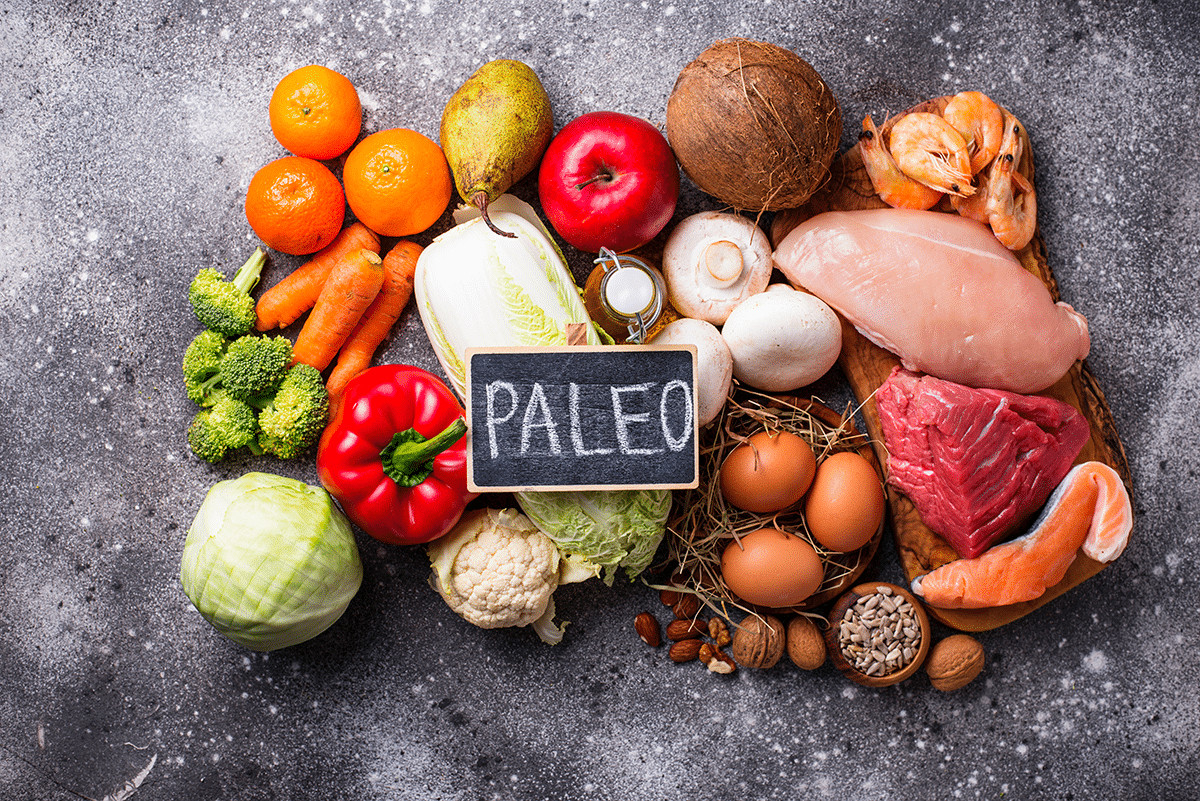
The first step will be to make a list of products that you can eat on this diet. These will primarily be:
– unprocessed meat – chicken, beef, pork, and other meats;
– fresh fruit and vegetables*;
– fish and all seafood;
– Spices (excluding or strongly limiting salt);
– selected fats* (e.g., olive oil, coconut oil; animal fats);
– certain types of dairy*.
*There are at least several variations of the paleo diet. In its most restrictive variants, the consumption of dairy products, rice, and potatoes, for example, is prohibited. However, some versions of this diet allow the consumption of such products.
On the other hand, it is worth creating an analogous list of forbidden products:
– cereal products (all types of bread and rolls, cereals, pasta);
– most leguminous vegetables (various kinds of beans, peas, soya beans);
– Refined oils (rapeseed oil, soybean oil);
– sweets (cakes, doughnuts);
– sweetened drinks and alcohol.

Conclude
The Paleo diet assumes eating unprocessed products, which are usually low in calories. The most crucial idea of this diet is an attempt to imitate eating typical for our ancestors. However, it should be emphasized that the paleo diet has proven benefits. It is a great way to lose excess weight and change unfavorable eating habits.
FAQ
What is the paleo diet?
What foods can you eat on a paleo diet?
Which foods are excluded from the paleo diet?
Can the paleo diet support weight loss?
How can you start following a paleo diet?