
Why Midnight Reset is more than a sleep aid: the science behind a complete night recovery formula (2026)
Sleep and Muscle Recovery: Why Midnight Reset is more than a sleep aid: the science behind a complete night recovery formula (2026)
An effective night recovery formula supports every stage of the sleep cycle and daytime performance. It reduces sleep latency, increases slow-wave depth, maintains REM sleep support, calms autonomic tone, and lowers morning inertia, preserving focus, reaction time, and mood on waking.
Single-ingredient options usually address a single issue—drowsiness or relaxation—but full recovery is multifactorial. Slow-wave sleep drives growth hormone release and tissue repair; REM enables memory consolidation and emotional processing; autonomic balance aids cardiovascular restoration. That’s why formulations combine mechanisms: GABAergic effects, glycine-mediated sleep thermoregulation, magnesium-dependent enzymatic support, serotonin-to-melatonin precursors, and mild HPA axis modulation and sleep restoration strategies.
This is why Midnight Reset is more than a sleep aid: the science behind a complete night recovery formula (2026) favours calibrated synergy over blunt sedation. Well-designed night recovery supplements can produce measurable overnight benefits that carry into the morning. When formulated correctly, users report quicker sleep onset, fewer awakenings, richer dreams, improved heart rate variability, and clearer thinking at breakfast without relying on stimulants.

What You’ll Learn in This Guide
In this guide, you’ll discover:
- Why a complete night recovery formula can be more effective than a single-ingredient sleep aid.
- How glycine, GABA, magnesium glycinate, L-theanine, L-tryptophan, and melatonin support different stages of sleep.
- Why deep sleep and REM sleep are equally important for recovery and next-day performance.
- The science behind the Midnight Reset ingredient profile and why each ingredient is included.
- Who may benefit most from a complete sleep and recovery formula.
- How to use advanced sleep formulas responsibly for the best results.
- The biggest mistakes people make when choosing sleep supplements.
- How to compare complete sleep stacks with standard melatonin products.
Quick Answer: Midnight Reset at a Glance
| Question | Quick Answer |
|---|---|
| Is Midnight Reset just a melatonin supplement? | No. It combines 14 active ingredients that support relaxation, sleep onset, deep sleep, and overnight recovery. |
| Why does Midnight Reset contain glycine? | Glycine supports thermoregulation, sleep quality, and overnight recovery, making it one of the foundation ingredients in the formula. |
| What does GABA do? | GABA supports relaxation and helps calm the nervous system before sleep. |
| Why are both L-Tryptophan and 5-HTP included? | Together, they support the body’s natural serotonin and melatonin pathways rather than relying only on supplemental melatonin. |
| Who is Midnight Reset designed for? | Experienced users looking for a complete night recovery formula rather than a simple sleep aid. |
| Can athletes use Midnight Reset? | Many athletes prioritise quality sleep because recovery, muscle repair, and nervous system restoration occur primarily during sleep. |
| How is Midnight Reset different from ordinary sleep aids? | Instead of focusing on a single ingredient, it supports multiple sleep mechanisms, including relaxation, sleep onset, deep sleep, REM sleep, and overnight recovery. |
| Does Midnight Reset help with muscle recovery? | Quality sleep plays an essential role in muscle repair, hormone regulation, and recovery, and Midnight Reset is formulated to support restorative sleep. |
| Can it be taken every night? | Because the formula contains Phenibut, it is intended for responsible use in accordance with the product directions, not for unrestricted daily use. |
| What makes Midnight Reset unique? | Its combination of amino acids, calming ingredients, botanicals, minerals, and melatonin creates a comprehensive night-recovery formula rather than relying on a single sleep ingredient. |
How Does Sleep Architecture Drive Full-Body Recovery?
Sleep cycles recur roughly every 90 minutes, with shifting priorities. Early cycles prioritise slow-wave sleep for physical repair; later cycles emphasise REM for memory and mood. A night recovery supplement should honour that architecture by easing onset, preserving slow-wave continuity, and supporting REM without suppressing phases. In practice, that means timing ingredients to biology—onset aids before lights-out, deep-sleep promoters during the first half of the night, and REM-friendly supports front-loaded or dosed to avoid late-night suppression—so a sleep supplement can work with, not against, natural cycling.
Adults commonly spend about 13–23% of sleep in slow-wave stages and 20–25% in REM. Slow-wave sleep corresponds with growth hormone pulses, glymphatic clearance, and muscle recovery. REM supports synaptic remodelling, emotional processing, and creativity. Lighter N2 stages link transitions. Disruptors such as late caffeine, alcohol, or stress fragment cycles, reduce REM share, and blunt slow-wave amplitude—so balanced support beats mere sedation. Measuring these changes with a tracker or polysomnography helps quantify benefits: improved slow-wave percentage, preserved REM minutes, fewer wake-after-sleep-onset episodes, and next-day cognitive benefits of better sleep, such as faster reaction time and steadier mood.
A multi-pathway blend can address these needs: onset aids (L-theanine, apigenin, GABA) shorten latency; deep-sleep promoters (glycine, magnesium glycinate) enhance slow-wave continuity and help lower core temperature; REM-supportive inputs (tryptophan) protect later cycles; adaptogens and HPA-axis modulation reduce nocturnal arousals. This shows how sleep architecture affects recovery and why supplements for deep sleep, cognition, and multi-ingredient sleep synergy matter. Formulations to improve sleep continuity should therefore combine calibrated doses, clear timing guidance, and ingredients that support REM without suppression, creating a night recovery supplement that delivers measurable improvement across the full night and into daytime performance.
Which Midnight Reset Ingredient Starts Working First?
| Ingredient | Typical Role | Relative Onset* |
|---|---|---|
| L-Theanine | Mental relaxation | 30–60 min |
| Melatonin | Circadian signalling | 30–90 min |
| GABA | Relaxation support | 30–60 min |
| Glycine | Body cooling & sleep quality | 30–60 min |
| Magnesium Glycinate | Relaxation support | Variable (often cumulative) |
| Ashwagandha | Stress support | Days to weeks |
| Phenibut | Strong calming support | 2–4 hours |
*Approximate timing varies between individuals.
Step 1: How to Fall Asleep Faster Without Next-Day Fog?
Focus on a calm descent rather than heavy sedation. L-theanine, GABA, and apigenin reduce pre-sleep arousal by boosting alpha activity and enhancing GABA-A signalling. Tryptophan supports endogenous melatonin production without abrupt peaks. Together, they promote a smoother progression into N1–N2 within 10–20 minutes. Adding a brief pre-sleep ritual—5–10 minutes of diaphragmatic breathing or progressive muscle relaxation—synergises with these ingredients by lowering sympathetic tone and cortisol, further shortening sleep onset without blunting later stages. This approach aligns with a sleep supplement strategy that prioritises natural neurochemistry and next-day cognition over brute-force sedation.
L-theanine (100–200 mg) supports relaxed alertness by modulating glutamate and alpha-band rhythms, quietening rumination. GABA (100–300 mg) reinforces the inhibitory tone, especially when combined with apigenin (25–50 mg), a chamomile flavone that gently modulates receptor activity. Tryptophan (250–500 mg) provides a substrate for serotonin and downstream melatonin, supporting the early night without disrupting later cycles. Formulation details matter: clinically studied L-theanine (Suntheanine® or equivalent) tends to show consistent effects; sublingual GABA can act faster for those with pronounced latency; and taking tryptophan on a light stomach increases central availability—while noting interactions with SSRIs or MAO inhibitors and advising consultation for those on prescription antidepressants.
Practical timing: dim lights 60 minutes before bed; take L-theanine and apigenin at T–45 minutes, GABA at T–30 minutes, and tryptophan at T–60 to T–90 minutes. Aim to fall asleep within 10–20 minutes. Avoid alcohol and heavy late meals, which delay REM and fragment N2. Add complementary habits—a warm shower 60–90 minutes before bed to trigger heat dissipation, blue-light-blocking glasses in the evening, and a consistent sleep window—to amplify the supplement effects; monitor progress with a tracker and expect measurable reductions in sleep-onset latency and fewer pre-sleep awakenings as the primary signals of success and contributors to next-day cognitive benefits of better sleep.
Which Ingredients Support Which Part of Sleep?
| Sleep Stage | Midnight Reset Ingredients |
|---|---|
| Falling asleep | Melatonin, L-Theanine, GABA |
| Deep Sleep | Glycine, Magnesium Glycinate, GABA |
| REM Sleep | L-Tryptophan, 5-HTP, Melatonin |
| Overnight Recovery | Glycine, Magnesium, Zinc |
| Relaxation | Ashwagandha, Passion Flower, Hops |
Step 2: How to Deepen Slow-Wave Sleep for Body Repair?
Boost slow-wave sleep by nudging thermoregulation, ionic balance, and inhibitory tone. Glycine sleep support lowers core temperature and improves continuity. Magnesium glycinate supports many enzymes and balances NMDA–GABA activity. Together, they enhance slow-wave density and reduce nighttime awakenings.
Glycine (3 g) taken 30–60 minutes before bed can shorten sleep onset and improve perceived quality. Mechanistically, it promotes peripheral vasodilation to facilitate heat offloading and helps synchronise thalamocortical rhythms associated with slow waves. Many people find it easier to return to sleep after brief arousals. Magnesium glycinate, providing 120–200 mg of elemental magnesium, supports GABA synthesis, stabilises excitatory receptors, and reduces cramps; the glycinate form is well absorbed and gentle on the stomach.
Stack guidance: Glycine anchors thermoregulation and deep-stage continuity; magnesium glycinate calms neuromuscular inputs and promotes parasympathetic dominance. Keep the bedroom cool (about 17–19°C) for extra thermic benefit. After late training, a warm shower 60–90 minutes before bed can enhance the cooling rebound that complements glycine. These tactics raise slow-wave percentage without blunting REM, aligning with goals for supplements for deep sleep and cognition.
Which Ingredients Are Fast-Acting vs Long-Term?
| Fast Acting | Long-Term Support |
|---|---|
| Melatonin | Ashwagandha |
| GABA | Magnesium status |
| L-Theanine | Zinc status |
| Phenibut | Sleep routine consistency |
Step 3: How to Support REM Sleep and Emotional Balance?
Protect REM by stabilising serotonin–melatonin rhythms and avoiding excessive late-night GABA dosing. Tryptophan supports serotonin availability for nocturnal melatonin synthesis; L-theanine preserves sleep integrity without suppressing REM. Balanced timing prevents early-night effects from diminishing later REM cycles.
REM clusters in the final third of the night and is sensitive to stress, alcohol, and abrupt awakenings. Tryptophan, taken earlier in the evening, helps build the serotonin pool that the pineal converts to melatonin, promoting a gradual circadian rise rather than a sharp spike. L-theanine keeps arousal smooth across cycles, supporting REM density and dream recall. Apigenin adds baseline calm, while avoiding heavy GABA close to lights-out helps maintain REM architecture.
Practical guardrails: front-load tryptophan instead of dosing at lights-out; keep L-theanine in the 100–200 mg range; avoid late nicotine and cap caffeine by early afternoon. Measure outcomes with a sleep tracker: rising REM proportion, fewer wake-after-sleep-onset minutes, and a steadier resting heart rate indicate effective REM sleep support and formulations to improve sleep continuity.
Which Ingredients Cross the Blood-Brain Barrier?
| Ingredient | Crosses BBB? |
|---|---|
| L-Theanine | ✔ Yes |
| Melatonin | ✔ Yes |
| Phenibut | ✔ Yes |
| L-Tryptophan | ✔ Yes |
| Glycine | Limited |
| Magnesium | Limited (depends on form) |
| GABA | Limited evidence (acts peripherally/enteric) |
Step 4: How to Calm the Nervous System and Reduce Nighttime Stress?
Stress fragments sleep. Adaptogens, GABA-supportive nutrients, and magnesium can reduce sympathetic drive. Ashwagandha, reishi, and rhodiola help modulate the HPA axis and support sleep restoration. GABA, apigenin, and magnesium glycinate shift the brain towards parasympathetic dominance, resulting in fewer awakenings and steadier heart rate variability.
Adaptogens work over days, not hours. Ashwagandha (standardised extracts) can reduce perceived stress and cortisol; reishi supports relaxation and immune balance; rhodiola improves resilience without heavy sedation and suits earlier dosing. Combining these with GABA and apigenin creates a calmer pre-sleep window. Magnesium glycinate supports enzymatic pathways, countering tension from training or evening stimulation. Together, these elements reduce micro-arousals that erode deep and REM stages.
Execution tips: take adaptogens consistently for 2–4 weeks to observe effects; prefer evening dosing for ashwagandha and reishi, and morning or early-afternoon dosing for rhodiola. Pair supplementation with breathwork (box breathing or 4-7-8) to lower heart rate quickly. Avoid doomscrolling and blue light. With these practices, stressful days can still lead to stable, restorative nights.
Why Do People Still Wake Up at 3 AM?
| Possible Cause | Ingredient That May Help |
|---|---|
| Stress / High Cortisol | Ashwagandha / L-Theanine |
| Poor sleep continuity | Glycine |
| Circadian disruption | Melatonin |
| Nervous system overactivity | GABA / Apigenin |
Why a Multi-Ingredient Formula Beats Single-Ingredient Approaches?
Recovery spans onset, deep stages, REM, and morning function. Single agents generally target one domain. Multi-ingredient stacks align mechanisms to each sleep phase, often yielding steadier nights and clearer mornings. The priority is calibrated synergy, not maximum sedation.
Consider the division of labour: L-theanine and apigenin quiet cortical chatter for faster onset; GABA supports inhibitory tone without eliminating REM; glycine cools core temperature and smooths deep-stage continuity; magnesium glycinate balances neurotransmitter levels and relaxes muscles; tryptophan preserves circadian rhythm and supports later REM; adaptogens prevent HPA-axis hijacking. When these components are balanced, trade-offs such as tolerance, oversedation, or next-day inertia decrease.
Products like Koka Labz Midnight Reset illustrate this systems approach. Rather than aiming for knockout effects, they layer modest, complementary levers that add up to improved sleep efficiency, richer slow-wave amplitude, more stable REM, and stronger morning cognition. This is why Midnight Reset is more than a sleep aid: the science behind a complete night recovery formula (2026) emphasises waking refreshed, as the night readies your brain for clarity.
Want to learn why melatonin sometimes stops working? Read our in-depth guide, Why Does Melatonin Stop Working?, where we explain the science behind melatonin timing, dosage, circadian rhythm and the most common mistakes that reduce its effectiveness.
Which Ingredients Work Through Different Pathways?
| Pathway | Ingredient |
|---|---|
| Circadian rhythm | Melatonin |
| GABAergic | GABA, Phenibut |
| Serotonin precursor | L-Tryptophan |
| Serotonin intermediate | 5-HTP |
| Stress adaptation (HPA Axis) | Ashwagandha |
| Thermoregulation (Body temp) | Glycine |
Why the Midnight Reset Formula Is Built Differently
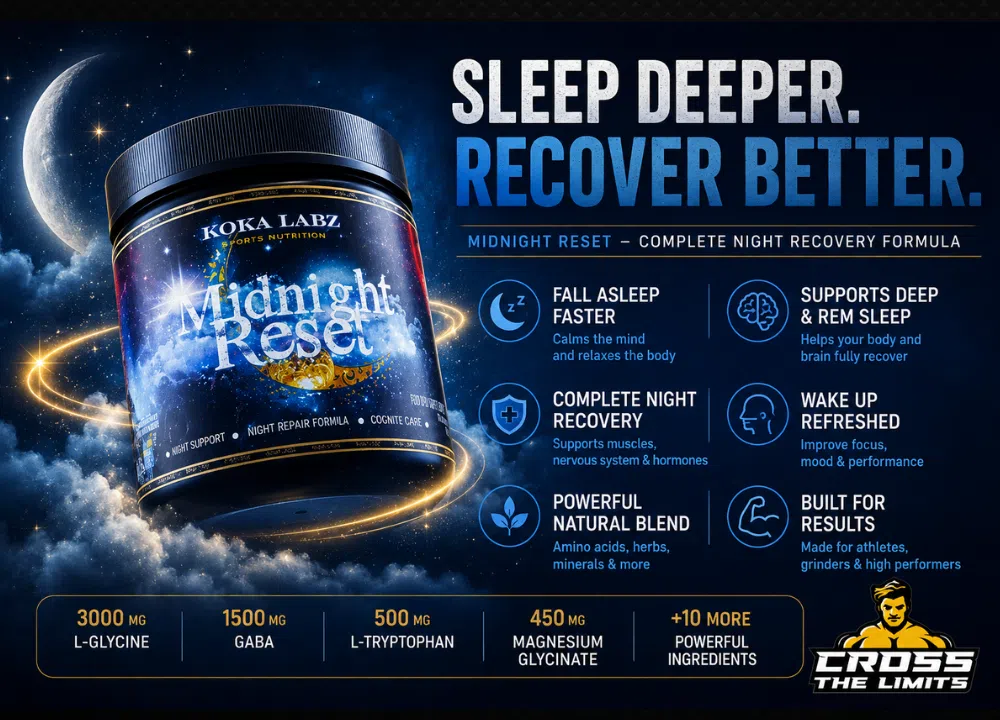
Midnight Reset is not designed like a basic sleep aid built around one or two familiar ingredients. Each serving provides a broad 11.1 g sleep-and-recovery blend, with 30 servings per container, combining amino acids, neurotransmitter-support compounds, minerals, botanicals, and sleep-timing nutrients in one complete formula.
The first thing that stands out is the high-dose amino acid base. L-Glycine at 3,000 mg is one of the most important ingredients in the formula because glycine is commonly used in advanced sleep stacks for sleep quality, thermoregulation, and overnight recovery. Rather than simply sedating the user, glycine is included to support a calmer, cooler, and more stable sleep environment.
Midnight Reset also contains 1,500 mg of GABA, making nervous system relaxation a major focus of the product. GABA is included to help support inhibitory tone and promote a more relaxed state before sleep. This is paired with 200 mg of L-Theanine, which is commonly used to reduce mental overactivity, support calm focus, and help the transition from wakefulness into sleep feel smoother.
Another major part of the formula is its support for the serotonin and melatonin pathways. Midnight Reset includes 500 mg of L-Tryptophan, 100 mg of 5-HTP, 10.5 mg of Vitamin B6 as P-5-P, and 3 mg of melatonin. Together, these ingredients are positioned to support the body’s natural sleep-wake signalling rather than relying solely on melatonin. This is one reason the product fits better into the category of a complete night-recovery formula than into that of a simple melatonin supplement.
Midnight Reset Supplement Facts: What Each Ingredient Adds
| Ingredient | Amount Per Serving | Main Role in the Formula |
|---|---|---|
| L-Glycine | 3,000 mg | Deep sleep support, thermoregulation, and overnight recovery |
| GABA | 1,500 mg | Nervous system calm and relaxation support |
| Phenibut | 750 mg | Advanced calming support for experienced users |
| L-Tryptophan | 500 mg | Serotonin and melatonin pathways support |
| Magnesium Glycinate 25% | 450 mg | Muscle relaxation and nervous system support |
| Ashwagandha Extract | 300 mg | Stress balance and evening calm |
| L-Theanine | 200 mg | Mental calm and reduced bedtime overactivity |
| Hops Extract | 150 mg | Botanical sleep support |
| Passion Flower Extract | 150 mg | Relaxation and sleep continuity support |
| 5-HTP | 100 mg | Serotonin pathway support |
| Apigenin 98% | 50 mg | Calm, relaxation, and sleep quality support |
| Zinc Citrate | 30 mg | Mineral support and recovery |
| Vitamin B6 as P-5-P | 10.5 mg | Neurotransmitter and serotonin pathway support |
| Melatonin | 3 mg | Circadian rhythm and sleep onset support |
A Multi-Pathway Formula, Not Just a Melatonin Product
Many sleep supplements depend heavily on melatonin as the main active ingredient. Midnight Reset takes a broader approach. Melatonin is included, but it is only one part of the formula. The product also includes ingredients that support relaxation, sleep onset, sleep continuity, stress balance, deep sleep, and overnight recovery.
This matters because poor sleep is rarely caused by one single issue. Some people struggle with racing thoughts. Others wake during the night, feel physically tense, or fall asleep but wake unrefreshed. A complete formula is designed to support several of these areas at once rather than focusing only on the first stage of falling asleep.
The combination of glycine, magnesium glycinate, and GABA supports the physical and nervous-system aspects of sleep. L-theanine, apigenin, passion flower, and hops support a calmer mental state before bed. L-tryptophan, 5-HTP, vitamin B6, and melatonin support the sleep-wake rhythm and neurotransmitter pathways. This layered structure is what makes Midnight Reset more complete than a standard single-ingredient sleep aid.
Which Ingredient Is Most Commonly Under-Dosed in Sleep Supplements?
| Ingredient | Often Seen | Midnight Reset |
|---|---|---|
| Glycine | 500–1,000 mg | 3,000 mg |
| L-Theanine | 100 mg | 200 mg |
| GABA | 100–500 mg | 1,500 mg |
| Magnesium | 100–200 mg | 450 mg Magnesium Glycinate |
| Apigenin | Often absent | 50 mg |
Why Glycine Is One of the Most Important Ingredients
One of the strongest features of Midnight Reset is the inclusion of 3 g of L-Glycine per serving. Glycine is often used in advanced sleep formulas because it is not just a relaxation ingredient. It plays a role in regulating body temperature, which is closely linked to sleep quality and deeper sleep stages.
A natural drop in core body temperature is one of the signals that helps the body prepare for sleep. Glycine may support this process by promoting peripheral vasodilation and heat loss, helping the body enter a more sleep-ready state. This is why glycine is especially relevant in a formula designed around night recovery rather than simple sedation.
For athletes, bodybuilders, and people using sleep as part of a recovery strategy, glycine also fits well, as restorative sleep is strongly connected to muscle repair, nervous system recovery, and next-day performance. In Midnight Reset, glycine acts as one of the foundation ingredients rather than a minor add-on.
The Advanced Calming Side of Midnight Reset
Midnight Reset also contains GABA, L-theanine, apigenin, passion flower, hops extract, and Phenibut, creating a strong calming profile. These ingredients are included to support relaxation and reduce nervous system overactivity that can make it difficult to fall or stay asleep.
The presence of 750 mg of Phenibut makes this an advanced sleep formula, not a basic everyday sleep aid for beginners. Phenibut is a powerful ingredient and should be treated with respect. It is best suited to experienced users who understand the importance of responsible use, avoiding alcohol or other sedatives, and following the label directions carefully.
This is also why Midnight Reset should not be viewed as just another “natural sleep aid.” It is a more comprehensive nighttime recovery product designed for users who want stronger multi-pathway support for relaxation, sleep continuity, and next-day recovery.
Midnight Reset Ingredient Groups
| Function | Ingredients in Midnight Reset |
|---|---|
| Sleep onset support | Melatonin, L-Tryptophan, 5-HTP, L-Theanine |
| Deep sleep support | L-Glycine, Magnesium Glycinate, GABA |
| Nervous system relaxation | GABA, L-Theanine, Phenibut, Apigenin |
| Stress and calm support | Ashwagandha, Apigenin, Passion Flower |
| Botanical sleep support | Hops Extract, Passion Flower Extract |
| Neurotransmitter pathway support | L-Tryptophan, 5-HTP, Vitamin B6 as P-5-P |
| Mineral support | Magnesium Glycinate, Zinc Citrate |
| Complete night recovery | Multi-pathway ingredient combination |
Who Is Midnight Reset Best Suited For?
Midnight Reset is best understood as a complete night recovery formula for users who want more than a basic melatonin product. It may be most relevant for people who struggle with sleep quality, nighttime restlessness, poor recovery, high evening stress, or waking up feeling unrefreshed.
It may also appeal to athletes, bodybuilders, and high-performance users who understand that recovery does not end when training stops. Deep sleep, REM sleep, and nervous system recovery all influence how well the body performs the next day. A product like Midnight Reset is designed around that broader recovery picture.
Because the formula is strong and includes advanced calming ingredients, it should be used responsibly. It is not suitable to combine with alcohol, prescription sedatives, or other strong sleep products unless cleared by a healthcare professional. Anyone using medication, especially antidepressants or central nervous system depressants, should seek professional advice before use.
Which Ingredients Are Most Popular in Scientific Sleep Research?
| Frequently Studied | Moderate Evidence |
|---|---|
| Melatonin | Passion Flower |
| Glycine | Hops |
| Magnesium | GABA |
| L-Theanine | Apigenin |
| Tryptophan | Ashwagandha |
What Is the Role of Glycine, GABA, Magnesium Glycinate, L-Theanine, Tryptophan, Apigenin, and Adaptogens?
Each ingredient plays a specific role in recovery. Glycine promotes cooling and deeper sleep; GABA and apigenin ease sleep onset; magnesium glycinate relaxes muscles and supports enzymes; L-theanine steadies attention; tryptophan supports the melatonin rhythm; adaptogens reduce stress spillover. Together, they fill gaps left by single agents.
Glycine 3 g at night enhances sleep continuity and morning vigour. GABA 100–300 mg supports inhibitory tone, while apigenin augments GABA-A signalling without heavy sedation. Magnesium glycinate provides bioavailable magnesium to reduce cramps and support neurotransmitter pathways. L-theanine modulates glutamate and alpha waves, aiding morning focus. Tryptophan sustains serotonin for melatonin conversion, protecting later REM. Adaptogens such as ashwagandha, reishi, and rhodiola help normalise stress systems that otherwise keep sleep shallow.
Design principles: match timing to biology—tryptophan earlier, GABA and apigenin closer to bed, glycine 30–60 minutes pre-sleep; keep doses moderate to avoid REM suppression; combine with sleep hygiene: cool room, consistent schedule, low evening light. Track outcomes for 2 weeks before making adjustments. The integrated stack targets the whole-night and next-day functions, not just the first 20 minutes.
Which Ingredients Support Recovery Beyond Sleep?
| Ingredient | Additional Role |
|---|---|
| Glycine | Collagen synthesis & tissue repair |
| Magnesium | Muscle contraction & enzymatic function |
| Zinc | Immune function & hormonal balance |
| Vitamin B6 | Neurotransmitter production & amino acid metabolism |
| Ashwagandha | Stress resilience & cortisol regulation |
How to Measure if Your Night Formula Truly Improves Recovery?
Assess success by deeper sleep and better daytime performance, not just rapid onset. Look for shorter latency, fewer awakenings, richer deep and REM proportions, and quicker morning clarity. Track objective metrics and subjective energy for at least 14 nights before changing doses.
Useful metrics: sleep efficiency above 85–90%; wake after sleep onset under 30–40 minutes; deep sleep and REM each often totalling 90–120 minutes, depending on total sleep time; resting heart rate slightly lower on recovery nights; heart rate variability trending up; faster morning reaction time and steadier mood. Combine wearable data with daily notes on energy, soreness, and focus to confirm real benefits beyond placebo.
Avoid nightly tinkering. Follow a protocol for two weeks to capture adaptation. If mornings feel heavy, move apigenin and GABA earlier or lower doses. If dreams seem muted, decrease late-night GABA or shift tryptophan earlier. The aim reflects why Midnight Reset is more than a sleep aid: the science behind a complete night recovery formula (2026)—optimise the full cycle, not just sedation.
Looking for the best supplement to improve sleep quality and overnight recovery? Explore our complete guide, What Makes the Best Sleep Supplement? Why Complete Sleep Stacks Work Better Than Melatonin Alone, to learn how ingredients like glycine, magnesium glycinate, GABA and L-theanine work together to support deeper, more restorative sleep.
Why Isn’t Melatonin the Largest Ingredient?
| Ingredient | Why a Higher Amount Isn’t Needed |
|---|---|
| Melatonin | Functions as a biological time signal rather than a sedative (more is not better). |
| Glycine | Requires gram-level dosing (3,000 mg) to affect thermoregulation. |
| GABA | Often used in higher amounts (1,500 mg) for noticeable nervous system calm. |
| Magnesium | Needed in larger quantities to provide meaningful elemental mineral intake. |
| L-Theanine | Highly effective in the moderate 100–200 mg range. |
Frequently Asked Questions
When should I take Midnight Reset?
Most users take Midnight Reset around 30–45 minutes before bedtime. Because the formula contains ingredients that support relaxation, sleep onset, and the natural sleep cycle, it works best when combined with a consistent bedtime routine and reduced evening light exposure.
Why does Midnight Reset contain both L-Tryptophan and 5-HTP?
These ingredients support different parts of the serotonin pathway. L-Tryptophan acts as the natural precursor to serotonin, while 5-HTP is one metabolic step closer. Together with vitamin B6 (P-5-P), they support the body’s normal production of serotonin and melatonin.
Why is 3 grams of glycine included?
L-Glycine is one of the highest-dose ingredients in Midnight Reset because it is widely used to support sleep quality, thermoregulation, and overnight recovery. Rather than acting like a sedative, glycine helps create conditions that favour deeper, more restorative sleep.
What role does magnesium glycinate play?
Magnesium glycinate is included to support normal muscle function, nervous system health, and relaxation. The glycinate form is highly bioavailable and is commonly chosen for evening supplementation because it is generally well tolerated by the digestive system.
Why does Midnight Reset contain GABA and L-Theanine together?
GABA and L-Theanine complement one another by supporting relaxation through different mechanisms. L-Theanine is often used to promote calm without excessive drowsiness, while GABA supports inhibitory neurotransmission and a relaxed nervous system before sleep.
Does Midnight Reset rely only on melatonin?
No. Although the formula includes 3 mg of melatonin, it is only one part of a much broader sleep and recovery system. Midnight Reset also contains glycine, GABA, magnesium glycinate, L-theanine, L-tryptophan, 5-HTP, apigenin, and botanical extracts to support multiple aspects of sleep quality.
Who is Midnight Reset designed for?
Midnight Reset is designed for experienced users looking for a complete night recovery formula rather than a simple sleep aid. It may appeal to athletes, bodybuilders, shift workers, and anyone who wants to support deeper sleep, relaxation, and next-day recovery.
Can Midnight Reset be taken every night?
Because the formula contains Phenibut, it is generally intended for responsible, occasional use rather than continuous daily supplementation. Users should always follow the product label and avoid exceeding the recommended serving.
Can I combine Midnight Reset with alcohol or other sedatives?
No. Midnight Reset should not be combined with alcohol, prescription sedatives, or other central nervous system depressants because this may increase the risk of excessive sedation and unwanted side effects.
What makes Midnight Reset different from ordinary sleep supplements?
Unlike products built around a single ingredient, Midnight Reset combines amino acids, neurotransmitter-support ingredients, minerals, botanical extracts, and melatonin into one comprehensive formula. Its goal is to support sleep onset, deep sleep, relaxation, and overnight recovery together rather than focusing on just one part of the sleep process.
Summary and Next Steps
A truly effective night recovery formula does far more than simply help you fall asleep. The best formulations are designed to support the entire sleep cycle—from relaxation before bed and healthy sleep onset to deep sleep, REM sleep, and overnight recovery. Ingredients such as glycine, GABA, magnesium glycinate, L-theanine, L-tryptophan, 5-HTP, apigenin, botanical extracts, and melatonin each contribute in different ways, creating a more comprehensive approach than single-ingredient sleep aids.
Midnight Reset reflects this multi-pathway philosophy. Rather than relying solely on melatonin, it combines amino acids, neurotransmitter-support ingredients, minerals, and botanical extracts into one advanced night recovery formula designed to support sleep quality, muscle recovery, nervous system restoration, and next-day performance.
Remember that even the best sleep supplement cannot replace the fundamentals. A consistent sleep schedule, reduced evening light exposure, sensible caffeine intake, regular exercise, and good nutrition remain the foundation of healthy sleep. Supplements work best when they complement these habits rather than replace them.
If you’re looking for Midnight Reset or want to compare it with other premium sleep and recovery supplements, Cross The Limits offers one of the UK’s and Europe’s largest selections of advanced sleep aids, nootropics, and sports nutrition products. Alongside carefully selected brands, you’ll also find detailed educational guides to help you choose the most suitable ingredients and formulas for your individual recovery goals.
Better recovery starts with better sleep—and better sleep starts with a smarter, science-based approach rather than relying on a single ingredient.