Koka Labz 9-Me-BC 15 mg – Advanced Nootropic Formula
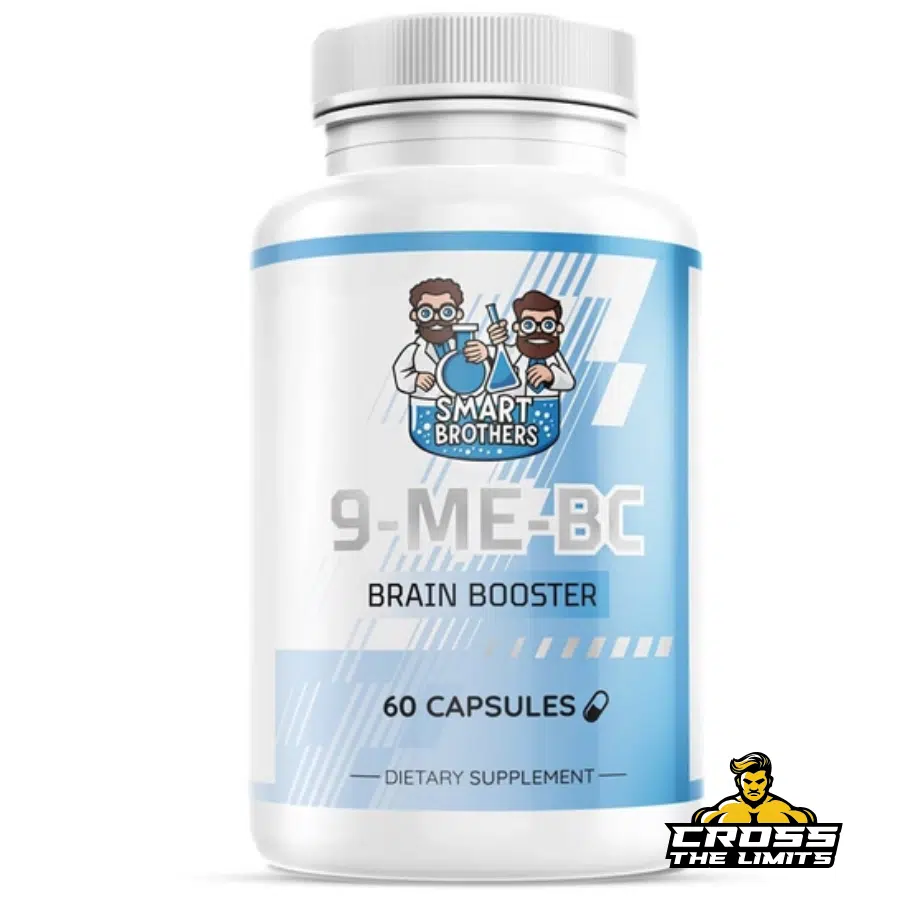
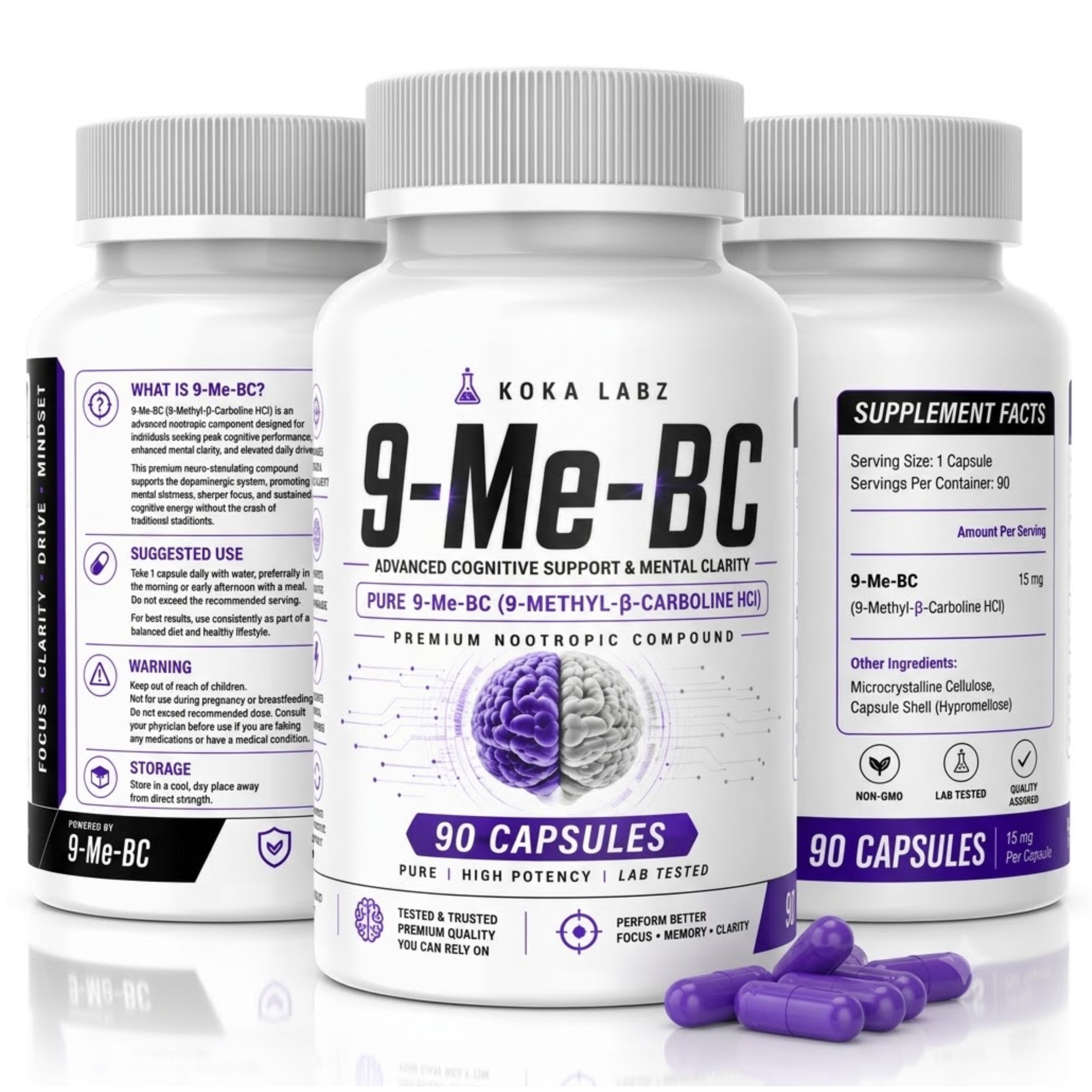
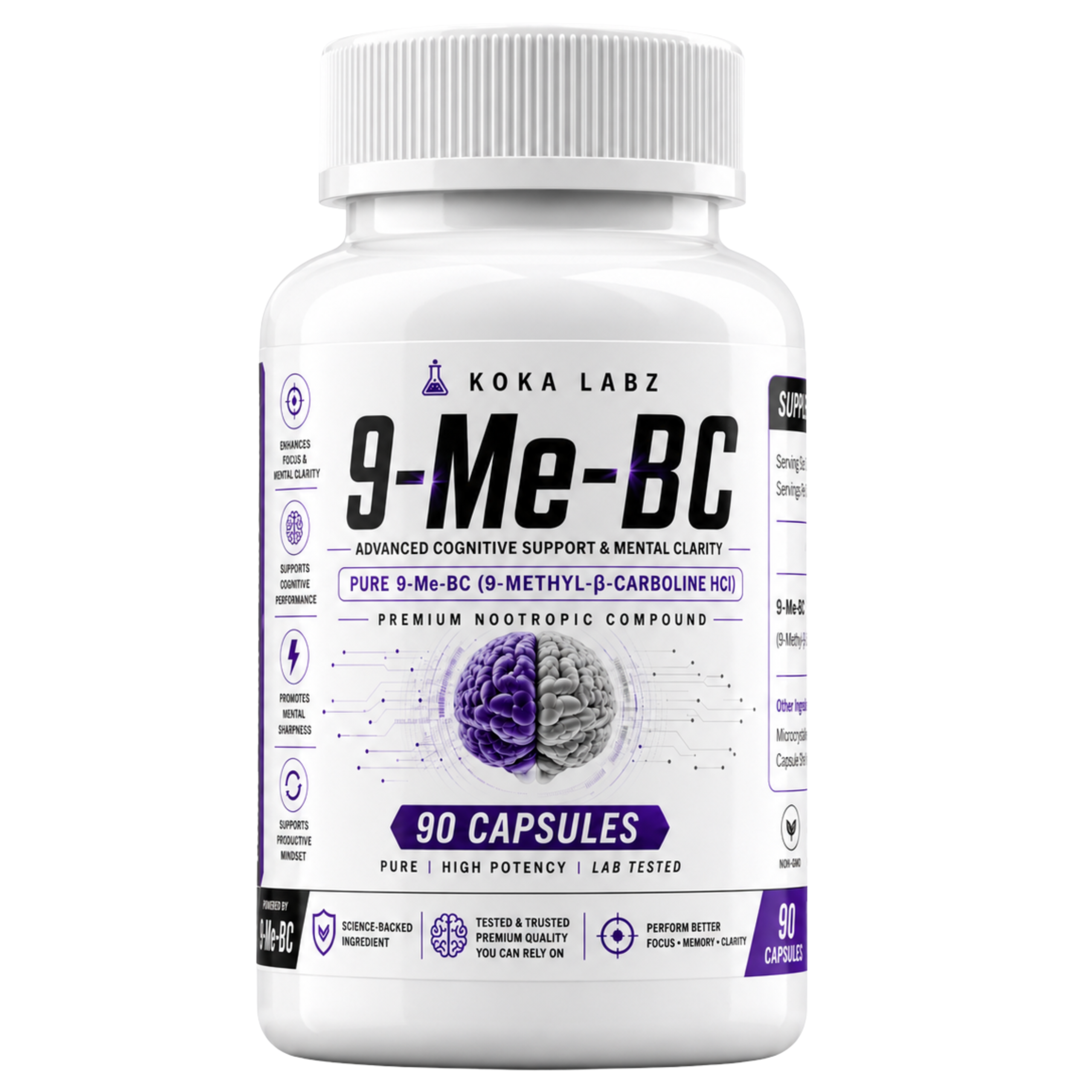
Koka Labz 9-Me-BC is an advanced single-ingredient nootropic designed for experienced users seeking focus, motivation, mental clarity, and high-level cognitive performance.
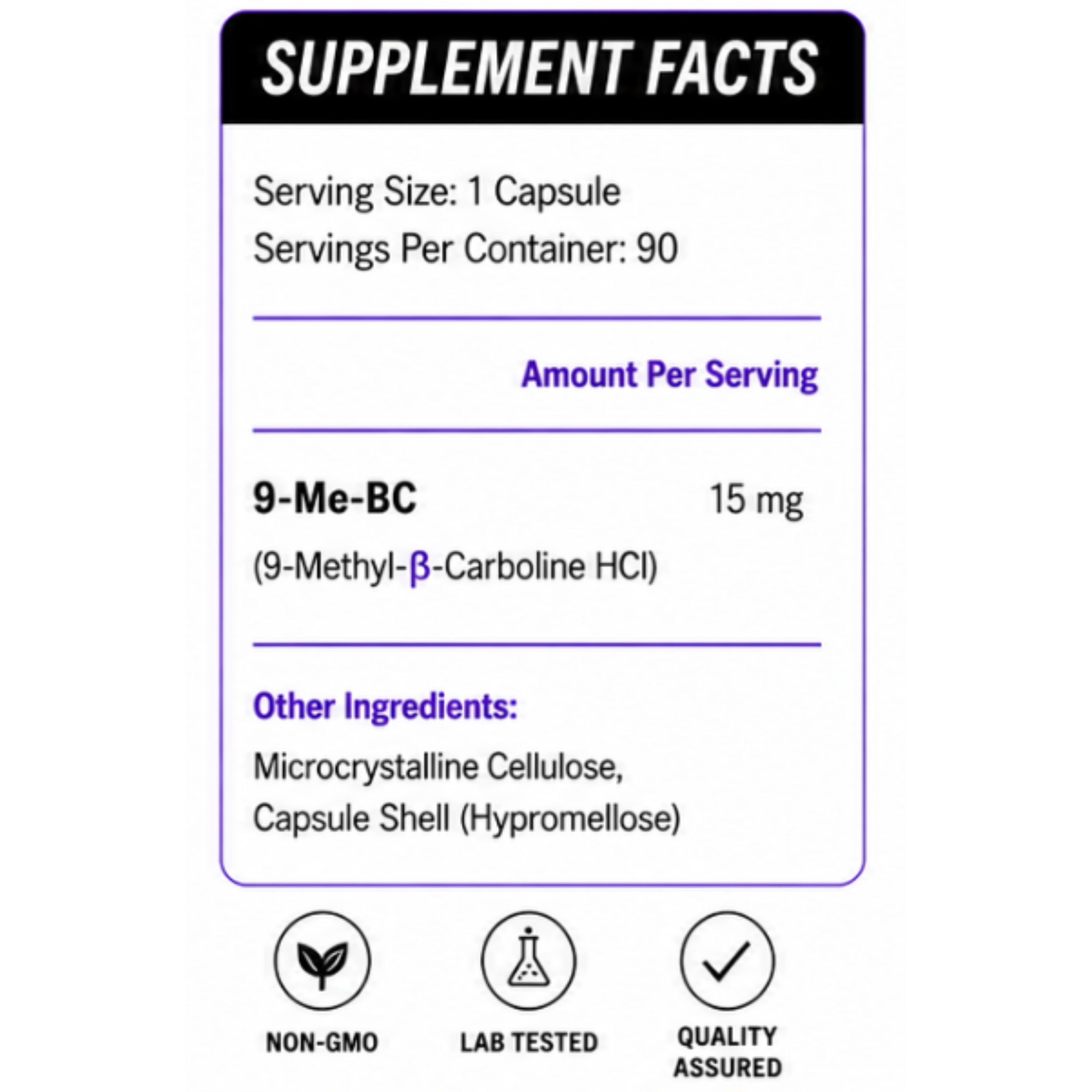
Each capsule provides 15 mg of 9-Methyl-β-Carboline HCl, with 90 capsules and 90 individually measured servings in every bottle. The formula contains no hidden proprietary blends or unnecessary combinations of competing active compounds, giving users complete transparency into what each capsule provides.
9-Me-BC has become one of the most widely discussed specialist compounds within modern nootropic and biohacking communities. Interest in the ingredient centres largely on preclinical research involving dopamine-related pathways, neuronal function and cognitive processes associated with motivation, learning and mental performance.
Unlike conventional focus supplements that rely primarily on caffeine to deliver a short-term boost in alertness, Koka Labz 9-Me-BC offers a more specialised approach for users seeking advanced non-caffeine nootropics.
Key Features
- 15 mg of 9-Me-BC per capsule
- 90 capsules and 90 servings
- Pure 9-Methyl-β-Carboline HCl
- Transparent single-ingredient formula
- No caffeine listed
- Plant-based hypromellose capsule
- Non-GMO formula
- Laboratory-tested quality
- Designed for experienced nootropic users
- Suitable for advanced cognitive stacks
Koka Labz 9-Me-BC at a Glance
Product Detail |
Specification |
|---|
Brand |
Koka Labz |
Product |
9-Me-BC |
Full Compound Name |
9-Methyl-β-Carboline HCl |
Strength |
15 mg per capsule |
Serving Size |
1 capsule |
Servings Per Container |
90 |
Capsules Per Bottle |
90 |
Formula Type |
Single-ingredient nootropic |
Caffeine Content |
None listed |
Capsule Material |
Hypromellose |
Target User |
Experienced nootropic and biohacking users |
What Is 9-Me-BC?
9-Me-BC is the abbreviated name for 9-Methyl-β-Carboline, a specialist compound belonging to the β-carboline family.
It has attracted attention because experimental research has explored its relationship with the dopaminergic system, including processes connected with dopamine synthesis, neuronal signalling and the function of dopamine-producing cells.
Dopamine is involved in several important areas of mental and physical performance, including:
- Motivation
- Attention
- Reward processing
- Task engagement
- Learning
- Decision-making
- Movement
- Goal-directed behaviour
This is why 9-Me-BC is frequently discussed by biohackers and experienced nootropic users looking beyond traditional caffeine-based focus formulas.
The compound should not be confused with a vitamin, herbal extract or conventional stimulant. It occupies a more experimental area of the nootropic market, and available research does not establish guaranteed cognitive benefits, long-term safety or a clinically validated human dosage.
Why Has 9-Me-BC Become So Popular?
A large proportion of mainstream productivity products depend on caffeine and similar stimulants. These formulas may produce noticeable alertness, but some users experience short duration, tolerance, restlessness or a subsequent reduction in energy.
Interest in 9-Me-BC has grown among individuals searching for a different type of cognitive formula.
Common reasons users research 9-Me-BC include:
- Supporting prolonged concentration
- Improving mental engagement
- Exploring dopamine-related nootropics
- Maintaining productivity during demanding projects
- Supporting a focused and motivated mindset
- Building advanced non-caffeine nootropic stacks
- Comparing alternatives to conventional stimulants
- Researching emerging cognitive compounds
9-Me-BC is commonly mentioned alongside compounds such as Bromantane, Noopept, PRL-8-53, IDRA-21 and Dihexa, although each has a different chemical structure and proposed mechanism.
How Does 9-Me-BC Work?
Research into 9-Me-BC remains primarily preclinical. Laboratory studies have examined the compound in relation to several dopamine-associated processes, but the relevance of these findings to routine human supplementation remains uncertain.
The main areas of scientific interest include:
Dopaminergic Signalling
9-Me-BC has been studied for its potential interaction with pathways involved in dopamine production and neuronal activity. This research is one of the principal reasons the compound has become popular within motivation- and productivity-focused nootropic communities.
Dopamine-Related Enzymes
Preclinical work has explored whether 9-Me-BC may affect enzymes involved in dopamine synthesis. These findings are scientifically interesting, but they do not establish that taking the compound will reliably increase dopamine or improve motivation in humans.
Neuronal Function
Laboratory models have also examined 9-Me-BC in connection with the function and survival of dopamine-producing neurons. Claims that it can permanently “repair” or regenerate the human dopamine system go beyond the available evidence.
Monoamine Oxidase Activity
9-Me-BC has demonstrated monoamine oxidase-inhibiting activity in laboratory research. This is particularly relevant when considering potential interactions with medicines, stimulants and other compounds affecting serotonin, dopamine or noradrenaline.
The strength and clinical significance of this activity following oral human use have not been firmly established.
Understanding the Dopaminergic System
The dopaminergic system is often described simply as the brain’s reward system, but its role is much broader.
Dopamine contributes to:
Function |
Role of Dopamine |
Motivation |
Helps regulate willingness to begin and continue goal-directed tasks |
Attention |
Supports the allocation of mental resources to relevant information |
Reward Learning |
Helps the brain associate actions with positive or negative outcomes |
Movement |
Plays an important role in motor control and coordination |
Decision-Making |
Influences how potential rewards, risks and effort are evaluated |
Habit Formation |
Contributes to learning repeated behavioural patterns |
Cognitive Control |
Supports planning, organisation and task switching |
Mental Drive |
Influences persistence and engagement with demanding activities |
Many substances that increase alertness do not necessarily improve every element of dopaminergic function. This is one reason users distinguish between short-term stimulation and broader dopamine-related cognitive research.
9-Me-BC and Focus
Focus is not controlled by a single neurotransmitter or brain region. It is influenced by sleep, stress, nutrition, environment, workload, dopamine, noradrenaline and many other factors.
9-Me-BC has attracted interest among users seeking support for:
- Sustained task engagement
- Mentally demanding work
- Long study sessions
- Programming and analytical tasks
- Complex planning
- Creative projects
- Competitive gaming
- Research and technical work
The compound should not be treated as a substitute for sleep, effective planning or a distraction-free work environment. Its popularity is based mainly on its specialist research profile rather than established clinical proof of improved focus in humans.
9-Me-BC and Motivation
One of the most common reasons users search for 9-Me-BC is its perceived relationship with motivation and mental drive.
Motivation depends on a complex interaction between:
- Dopamine signalling
- Mood
- Stress
- Sleep quality
- Physical health
- Expected reward
- Task difficulty
- Personal habits
- Environment
Preclinical findings involving dopamine-related processes have encouraged discussion about whether 9-Me-BC could influence motivation. However, it has not been established as a treatment for low motivation, anhedonia, depression or stimulant-related problems.
Persistent loss of motivation or pleasure can have medical or psychological causes and should not automatically be treated as a simple dopamine deficiency.
9-Me-BC and Productivity
Productivity requires more than energy. It also depends on concentration, planning, motivation, mental endurance and the ability to remain engaged with a task.
Koka Labz 9-Me-BC may appeal to experienced users working in areas such as:
- Software development
- Business management
- Finance and trading
- Engineering
- Academic research
- Content production
- Design
- Competitive gaming
- Data analysis
- Entrepreneurship
A transparent single-ingredient formula allows users to evaluate 9-Me-BC separately rather than trying to identify its contribution within a large proprietary blend.
9-Me-BC vs Traditional Stimulant Focus Products
Feature |
Koka Labz 9-Me-BC |
Conventional Caffeine Formula |
Main Ingredient Type |
Advanced β-carboline compound |
Central nervous system stimulant |
Primary Research Interest |
Dopamine-related pathways and neuronal function |
Alertness and reduced perception of fatigue |
Immediate Energy Rush |
Not its primary positioning |
Common |
Caffeine Included |
No caffeine listed |
Usually included |
Formula Style |
Single active ingredient |
Often multi-ingredient |
Dose Transparency |
15 mg clearly disclosed |
Varies by product |
Typical User |
Experienced biohacker or nootropic user |
General energy and productivity user |
Human Evidence |
Limited |
Extensive for caffeine |
Long-Term Safety Data |
Not established |
Well characterised within normal caffeine use |
9-Me-BC should not be expected to feel identical to coffee, an energy drink or a stimulant pre-workout. Its appeal lies in its different research profile rather than a guaranteed immediate increase in energy.
Why Choose a Single-Ingredient Formula?
Complex nootropic blends may contain ten or more active ingredients. While this can appear impressive, it may also make it difficult to determine which compound produced a desired or unwanted effect.
Koka Labz 9-Me-BC provides one clearly identified active ingredient.
This offers several practical advantages:
- Exact dose disclosure
- No hidden proprietary blend
- Easier evaluation of individual response
- Greater control when constructing a stack
- No overlapping active nootropics
- No caffeine masking the compound’s individual profile
- Straightforward comparison with other 9-Me-BC products
The formula is completed with microcrystalline cellulose and a hypromellose capsule shell.
Who Is Koka Labz 9-Me-BC Designed For?
Koka Labz 9-Me-BC is intended for experienced adults familiar with specialist nootropic supplementation.
It may be of interest to:
- Biohackers
- Experienced nootropic users
- Entrepreneurs
- Programmers
- Researchers
- Students familiar with advanced compounds
- Competitive gamers
- Professionals with demanding cognitive workloads
- Users exploring dopamine-focused nootropics
- Individuals seeking a caffeine-free single-compound formula
It is not positioned as an entry-level multivitamin or conventional herbal brain supplement.
Potential Areas of Interest
User Goal |
Why 9-Me-BC Is Researched |
Important Limitation |
Focus |
Discussed in relation to dopaminergic function and task engagement |
Direct human evidence is limited |
Motivation |
Dopamine plays a role in goal-directed behaviour |
Not an approved treatment for anhedonia or depression |
Mental Clarity |
Users often seek a non-caffeine cognitive formula |
Individual subjective effects may vary |
Productivity |
Frequently used within advanced work-focused stacks |
Cannot replace sleep, organisation or workload management |
Learning |
Dopamine influences learning and reward processing |
No guaranteed improvement in academic performance |
Cognitive Endurance |
Interest centres on sustained mental performance |
Human duration and pharmacokinetics are not established |
Biohacking |
Offers a distinct mechanism from common supplements |
Long-term safety remains uncertain |
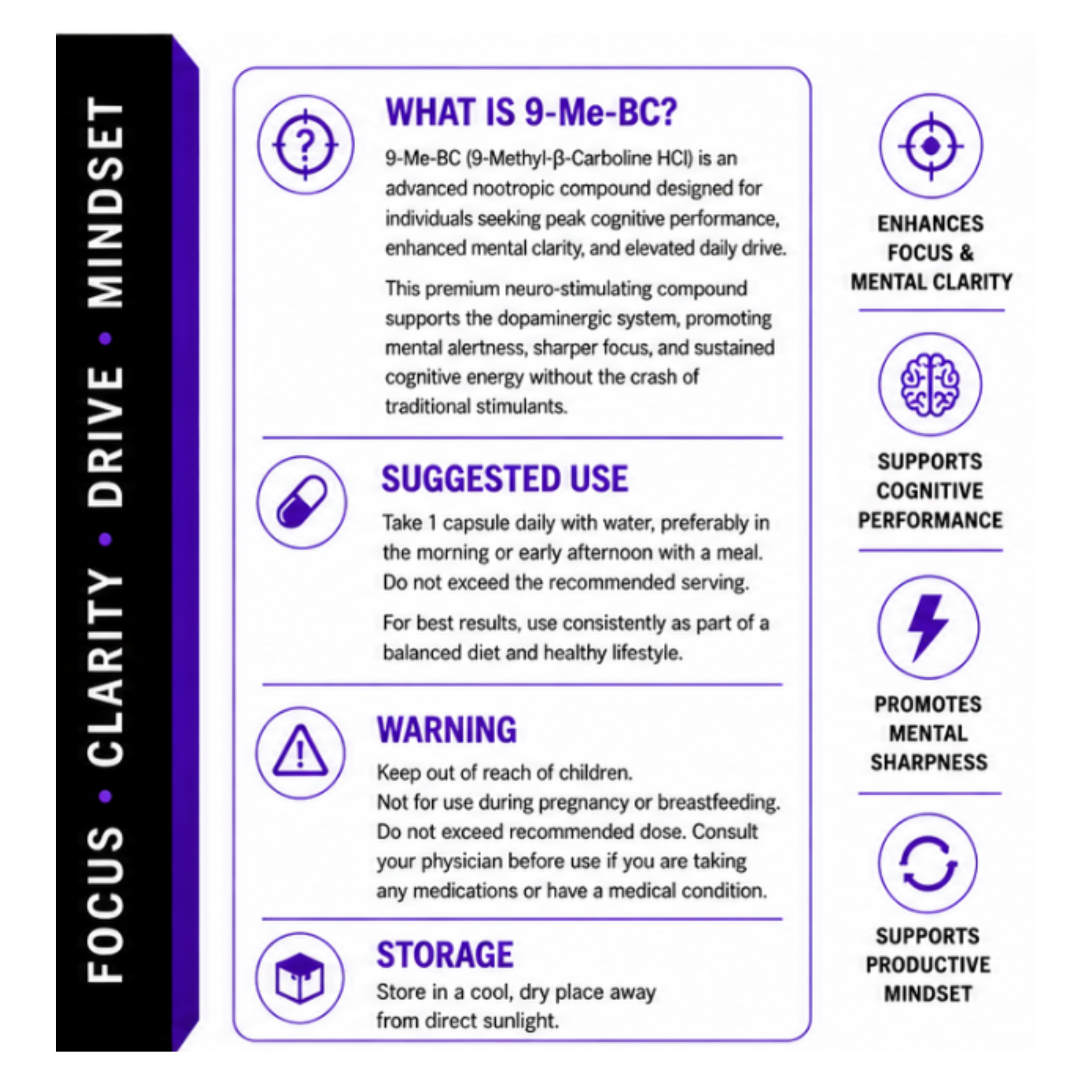
Warning
Keep out of reach of children.
Not intended for use during pregnancy or breastfeeding.
Do not exceed the recommended dose.
Consult a qualified healthcare professional before use if you are taking medication, using other dopamine- or monoamine-active products, or have an existing medical condition.
Storage
Store in a cool, dry place away from direct sunlight.
Keep the container tightly closed and protect it from heat and moisture.




















No product reviews yet — add the first one!