



O-304 vs Cardarine: Which Is Better For Fat Loss?
Key Takeaways
- O-304 and Cardarine operate through completely different biological pathways, so they should not be treated as interchangeable compounds.
- O-304 activates AMPK pathways involved in cellular energy homeostasis and glucose metabolism, while Cardarine activates PPAR-delta pathways associated with fatty acid utilisation and endurance.
- O-304 is discussed as a stimulant-free, metabolism-focused alternative to traditional high-stimulant cutting approaches.
- Cardarine is more strongly associated with endurance and prolonged aerobic performance, while O-304 attracts greater interest around glucose handling and metabolic support.
- Neither compound replaces proper nutrition, resistance training, calorie control, adequate protein intake or recovery.
- Both compounds raise important safety and anti-doping considerations, and neither should be treated as an established recreational fat-loss supplement.
O-304 vs Cardarine compares two non-stimulant compounds associated with cutting, body recomposition and metabolic performance, but they work through completely different biological pathways. O-304 is an AMPK activator, while Cardarine, also known as GW-501516, is a PPAR-delta agonist.
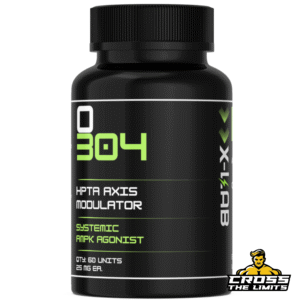
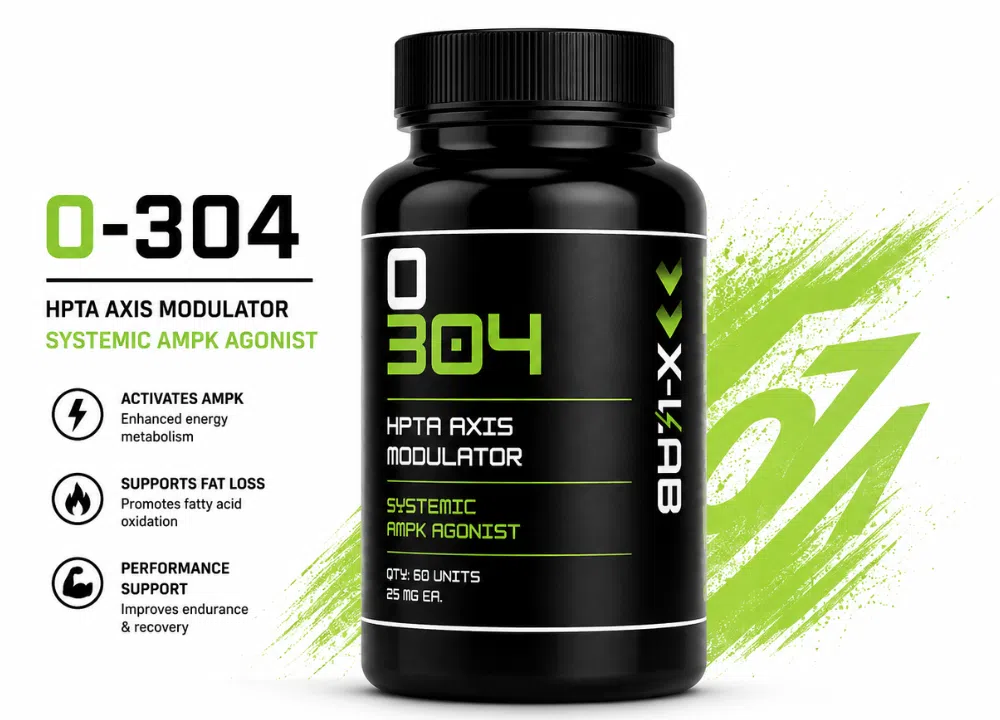
This guide examines their potential advantages and limitations for fat loss, endurance, conditioning and body recomposition. It also explains why X-LAB O-304 60 Capsules has attracted attention as an emerging non-stimulant fat-loss product and alternative to traditional stimulant-heavy cutting formulas.
Best Non-Stimulant Fat Burners in 2026
The following table reflects how these compounds are commonly positioned within performance and research-focused communities. The ratings should not be interpreted as clinical rankings of safety or proven fat-loss effectiveness.
| Compound | Primary Focus | Rating |
|---|---|---|
| O-304 | AMPK Activation & Metabolic Support | ⭐⭐⭐⭐⭐ |
| SLU-PP-332 | Exercise Mimetic & Fat Oxidation | ⭐⭐⭐⭐⭐ |
| BAM-15 | Mitochondrial Uncoupling Research | ⭐⭐⭐⭐⭐ |
| AMP NEX | O-304 + SLU-PP-332 Combination | ⭐⭐⭐⭐⭐ |
Among the most discussed products in this category are:
- X-LAB O-304 60 Capsules;
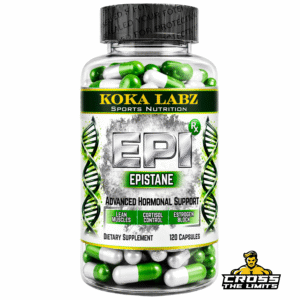
- KOKA LABZ SLU-PP-332 High-Strength;
- X-LAB SLU-PP-332 500mcg;
- X-LAB BAM-15 30mg;
- X-LAB AMP NEX.
These products have become increasingly popular among users seeking advanced non-stimulant approaches to cutting, body recomposition and metabolic optimisation without the typical stimulant-related effects of traditional fat burners.

What Are O-304 and Cardarine?
O-304 and Cardarine are both discussed in relation to non-stimulant metabolic and performance effects, but their mechanisms are fundamentally different.
O-304 is a small-molecule pan-AMPK activator originally investigated in metabolic disease, insulin sensitivity and energy regulation. AMPK plays a central role in cellular energy balance, glucose uptake and fatty acid metabolism.
Interest in the “O-304 fat burner” concept therefore comes from its potential metabolic effects rather than conventional central nervous system stimulation.
Readers interested specifically in glucose-related supplementation can also explore our Blood Sugar Control category.
Cardarine, or GW-501516, is a PPAR-delta agonist. It influences gene transcription connected with fatty acid metabolism and oxidative energy pathways.
Cardarine became popular in performance circles because research and user discussions associated it with endurance, increased fat utilisation and greater exercise capacity.
Unlike O-304, Cardarine is discussed much more heavily as an endurance-performance compound rather than primarily as a glucose-metabolism intervention.
How Do O-304 and Cardarine Compare?
The ratings below preserve the original comparison framework, but they represent theoretical positioning and user interest rather than head-to-head clinical evidence.
| Category | O-304 | Cardarine (GW-501516) |
|---|---|---|
| Primary Mechanism | AMPK Agonist | PPAR-Delta Agonist |
| Fat Loss Potential | ⭐⭐⭐⭐⭐ | ⭐⭐⭐⭐⭐ |
| Body Recomposition | ⭐⭐⭐⭐⭐ | ⭐⭐⭐⭐☆ |
| Endurance Support | ⭐⭐⭐⭐☆ | ⭐⭐⭐⭐⭐ |
| Metabolic Efficiency | ⭐⭐⭐⭐⭐ | ⭐⭐⭐⭐☆ |
| Insulin Sensitivity Focus | ⭐⭐⭐⭐⭐ | ⭐⭐⭐☆☆ |
| Energy Utilisation | ⭐⭐⭐⭐⭐ | ⭐⭐⭐⭐☆ |
| Stimulant Free | ⭐⭐⭐⭐⭐ | ⭐⭐⭐⭐⭐ |
| Best For | Fat Loss, Metabolic Health, Recomp | Endurance, Cutting, Performance |
Which Compound Is More Closely Associated With Each Goal?
| Goal | Winner |
|---|---|
| Pure Fat Loss | Draw |
| Body Recomposition | O-304 |
| Endurance Performance | Cardarine |
| Metabolic Support | O-304 |
| Insulin Sensitivity Focus | O-304 |
| Long Cardio Sessions | Cardarine |
| Non-Stimulant Cutting | Draw |
| Overall Versatility | O-304 |
What Are the Main Pros of Each Compound?
| O-304 Pros | Cardarine Pros |
|---|---|
| Direct AMPK master-switch activation | Exceptional raw aerobic endurance support |
| Strong, deep metabolic tissue focus | Enhanced fatty acid utilization paths |
| Outstanding insulin sensitivity benefits | Highly popular among cutting athletes |
| Completely stimulant-free profile | Supports drastically longer training blocks |
| Excellent clean recomposition potential | Well-documented performance compound |
These advantages describe the original positioning of each compound. Terms such as “outstanding” or “exceptional” should not be interpreted as proof of clinically established superiority for recreational fat loss.
How Do AMPK and PPAR-Delta Work Differently?
AMPK acts primarily as a cellular energy sensor, while PPAR-delta changes gene transcription involved in fatty acid metabolism and oxidative performance.
When cellular energy availability falls, AMPK promotes pathways that help restore energy balance. This can include effects on glucose uptake, fatty acid oxidation and storage-related signalling.
PPAR-delta activation works differently. It alters transcriptional programmes associated with lipid metabolism and oxidative muscle function over time.
The main practical differences discussed include:
- Mechanism: O-304 activates pathways associated with cellular energy-deficit signalling and ATP homeostasis. Cardarine’s PPAR-delta activity alters transcriptional programmes and increases expression of proteins involved in lipid metabolism.
- Short-term scale changes: The original O-304 discussion links early weight changes with glycogen, intracellular water and improved glucose handling. Cardarine-related scale changes may be harder to interpret when increased training volume alters glycogen storage and exercise-related inflammation.
- Visceral and hepatic fat: AMPK-related metabolic interventions have been studied in relation to hepatic and visceral metabolic markers. Direct human evidence establishing Cardarine as a treatment for visceral fat remains limited.
- Endurance: O-304 has been investigated for metabolic and exercise-related effects, while Cardarine is much more strongly associated with prolonged endurance in performance discussions.
O-304 research in people with type 2 diabetes has also investigated fasting glucose, insulin resistance and microvascular perfusion. That clinical context is very different from recreational bodybuilding use.
O-304 vs Cardarine: What Is the Quick Answer?
If the comparison is based purely on intended mechanism, O-304 is more metabolism-focused, while Cardarine is more endurance-focused.
O-304 is therefore discussed more often in relation to glucose handling, insulin sensitivity and body recomposition. Cardarine is more commonly associated with prolonged aerobic capacity and endurance-oriented cutting.
That distinction describes their positioning rather than a recommendation to use either compound. Neither has an established role as an approved recreational fat-loss supplement.
What Other Non-Stimulant Options Are Discussed?
The growing demand for non-stimulant approaches has created interest in several additional experimental compounds.
Frequently discussed examples include:
- KOKA LABZ SLU-PP-332 High-Strength;
- X-LAB SLU-PP-332 500mcg;
- X-LAB BAM-15 30mg;
- X-LAB AMP NEX.
AMP NEX combines O-304 and SLU-PP-332 in one formula and is marketed toward users interested in both AMPK-related metabolic support and exercise-mimetic pathways.
The fact that two experimental compounds appear together in a commercial formula does not establish that combining them is safer or more effective.
For a broader comparison of conventional and advanced options, read our guide to which fat burners to choose.
Which Is More Closely Associated With Body Recomposition and Endurance?
Cardarine is more strongly associated with endurance and work capacity, while O-304 is more closely associated with glucose handling and metabolic efficiency.
In theory, greater endurance could support body recomposition by allowing more training volume and total activity. O-304 approaches the same broad goal differently through metabolic and glucose-related pathways.
Final body-composition outcomes still depend heavily on calorie intake, protein, diet quality and progressive resistance training.
What Are the Main Recomposition Levers?
- Training volume: Cardarine is associated with a larger perceived endurance effect. Some performance discussions cite increases of roughly 10% to 30% in cardio duration over a training block, although this should not be treated as a clinically established expectation.
- Carbohydrate tolerance: O-304 is discussed in relation to improved glucose handling and insulin signalling. The proposed practical benefit is better peri-workout carbohydrate utilisation with less glycaemic disruption.
- Muscle retention: Neither compound replaces resistance training or sufficient protein intake. Around 1.6 to 2.2 g/kg of protein is commonly used as a practical range for resistance-trained people during calorie restriction.
The proposed metabolic rationale is that greater use of lipid as fuel may reduce reliance on other energy substrates. This should not be interpreted as evidence that either compound directly prevents muscle loss.
For more on endurance-oriented supplementation and training performance, explore our article on supplements used to support endurance.
What Are the Main Safety Risks of O-304 and Cardarine?
Neither O-304 nor Cardarine should be treated like an ordinary over-the-counter weight-loss supplement.
O-304 has been investigated clinically in people with type 2 diabetes. In a 28-day Phase IIa trial, adverse events occurred in both O-304 and placebo groups, with no serious adverse event reported in the O-304 group and no clinically significant changes in laboratory safety parameters or vital signs.
The original discussion also mentions possible gastrointestinal adjustment, appetite changes or lightheadedness related to blood-glucose fluctuations. These should be treated as potential individual experiences rather than established characteristic effects of O-304 based on current trial evidence.
If O-304 is being medically investigated or monitored, fasting glucose and other metabolic markers are relevant because the compound directly targets pathways involved in glucose homeostasis.
Cardarine carries substantially different concerns. It was never approved for human medical use, and development was discontinued after serious safety concerns emerged from long-term animal studies.
GW501516/Cardarine is prohibited under the 2026 WADA Prohibited List as a PPAR-delta agonist. Competitive athletes should therefore treat its anti-doping status as a major concern.
The 2026 WADA list also prohibits AMPK activators as a class. Because O-304 is a pan-AMPK activator, competitive athletes should not assume that it is compatible with anti-doping rules simply because it is non-stimulant.
What Common Mistakes Should You Avoid?
- Expecting rapid fat-loss transformations while ignoring the calorie deficit.
- Ignoring anti-doping regulations when researching Cardarine or other metabolic modulators.
- Assuming O-304 is automatically permitted in tested sport because it is non-stimulant.
- Skipping appropriate baseline health assessment when using experimental compounds.
- Ignoring metabolic, liver or lipid markers where a clinician considers them relevant.
- Stacking multiple undocumented research compounds simultaneously, making individual tolerance and effects impossible to interpret clearly.
Label transparency matters as well. Our guide to understanding supplement labels, ingredients and recommendations explains what to look for when comparing commercial formulas.
Final Verdict: O-304 vs Cardarine
O-304 is the more metabolism-focused compound, while Cardarine is more strongly associated with endurance performance. Both have been discussed in relation to fat loss and body recomposition, but they approach those goals through different pathways.
Users interested in glucose handling, metabolic efficiency and nutrient partitioning are more likely to encounter O-304 in research discussions. Endurance athletes and long-distance runners have historically shown greater interest in Cardarine because of its PPAR-delta mechanism and performance profile.
The original comparison therefore positions O-304 toward clean body recomposition and Cardarine toward endurance-heavy cutting. However, the final decision cannot be separated from evidence quality, individual health risk and anti-doping constraints.
For long-term physique progress, calorie control, progressive overload, sleep quality and adherence remain more important than either experimental compound.
Research compounds are best understood as experimental metabolic interventions rather than guaranteed additions to a fat-loss plan.
For products organised around athletic output rather than a specific compound, you can also browse the Performance category.
Additional Resources
For scientific and regulatory verification, useful external resources include the PubMed scientific research database and the World Anti-Doping Agency Prohibited List.
Further Reading
- Fat Burners: Effects and Side Effects
- How to Effectively Reduce Belly Fat
- How Weight-Loss Supplements Can Enhance Athletic Performance
FAQ
Is O-304 better than Cardarine for fat loss?
They target metabolism through different pathways. O-304 activates AMPK and is discussed more heavily in relation to glucose handling and metabolic support. Cardarine activates PPAR-delta and is associated more strongly with endurance and fatty acid utilisation. Current evidence does not establish either compound as the superior approved treatment for recreational fat loss.
What is the core difference between an AMPK agonist and a PPAR-delta agonist?
AMPK activation changes cellular energy signalling and promotes responses associated with low-energy states. PPAR-delta activation changes gene transcription involved in lipid metabolism and oxidative performance. O-304 and Cardarine therefore influence related metabolic outcomes through different mechanisms.
Is O-304 a stimulant fat burner?
No. O-304 is not a conventional central nervous system stimulant and is not associated with the same caffeine-like stimulation, jitters or stimulant crash. However, being stimulant-free does not establish that it is safe, approved for recreational fat loss or permitted under anti-doping rules.
Can O-304 be stacked with SLU-PP-332?
Some advanced users discuss combining them because they target different metabolic pathways, and commercial formulas such as AMP NEX combine O-304 with SLU-PP-332. However, this does not establish the safety or effectiveness of self-directed stacking, especially because both are experimental compounds.