
An In-Depth Look at DMAA in Dietary Supplements: Unveiling the Risks and Exploring Safer Alternatives

DMAA pre-workout formulas helped define the reputation of the hardcore supplement market. From the early days of Jack3d to the continuing debate around DMHA and geranium-related claims, these products attracted attention for intense stimulation—and scrutiny for their health risks. What is backed by evidence, what is supplement-industry mythology, and what should UK lifters understand before comparing old and new formulas?
This guide explains DMAA’s history, what stimulant effects can and cannot tell you about workout performance, how DMAA differs from DMHA, what regulators have said, and how to interpret legacy product names. For a broader view of conventional formulas, explore our pre-workout supplement collection.
Quick Answer: What Is DMAA in a Pre-Workout?
DMAA (1,3-dimethylamylamine, also called methylhexanamine) is a stimulant once used in nasal decongestant medicines and later promoted in sports supplements. Its use became controversial because of concerns about raised blood pressure and serious cardiovascular events. UK regulators have acted against unauthorised DMAA-containing medicinal products, while the US FDA advises consumers not to buy or use dietary supplements containing DMAA.
The key distinction: a product’s “hardcore” reputation is not proof of improved performance, ingredient safety or legal compliance. Current product labels matter more than historical marketing.
Key Takeaways
- DMAA and DMHA are different substances. Their names are sometimes grouped, but they should not be treated as interchangeable.
- A stronger stimulant feeling is not the same as better results. Long-term progress depends on training quality, nutrition and recovery.
- Geranium extract is not reliable proof of naturally occurring DMAA. Assess an ingredient’s identity carefully.
- UK and US regulators have raised serious concerns. Selling a product online does not establish that it complies with local rules.
- Legacy names can refer to multiple formulas. Always check the exact version and batch.
- Chest pain, fainting or serious heart symptoms are emergency warning signs, not ordinary pre-workout effects.
What Are High-Stim Pre-Workouts?
High-stim pre-workouts are products marketed primarily around pronounced alertness, drive and perceived energy. They differ from ordinary pre-workouts not because there is a universally recognised “high-stim” threshold, but because of their stimulant-heavy positioning and ingredient profiles. Caffeine is common in mainstream products; some older or controversial formulas have also included substances such as DMAA or DMHA.
A useful distinction is between stimulation and performance support. Caffeine may improve certain types of exercise performance in some people. Creatine and beta-alanine target different physiological pathways. A pre-workout that produces strong sensations may still provide limited benefit to strength or muscle growth.
| Formula type | Typical emphasis | What to evaluate |
|---|---|---|
| Standard caffeinated pre-workout | Alertness and reduced perceived fatigue | Total caffeine, other stimulants, timing, sleep effects |
| Stimulant-free pre-workout | Training support without caffeine | Evidence-based ingredients and meaningful declared amounts |
| High-stim pre-workout | Strong subjective stimulation | Ingredient legality, cardiovascular risk, stacking and product authenticity |
| Legacy / reformulated product | Familiar name with changing ingredients | Exact label, manufacturing version, batch and country of sale |
What Is DMAA (1,3-Dimethylamylamine)?
DMAA is a synthetic stimulant substance historically used in nasal decongestant medicine. In the supplement industry, it became associated with the pursuit of pronounced energy and focus, especially in pre-workouts and weight-management products. DMAA has also been labelled methylhexanamine, geranamine and other chemical names. A key difference exists between reported sensations and proven outcomes. Reports of tunnel vision, euphoria, or reduced fatigue are not reliable measures of endurance, strength gains, or safety. Human evidence supporting DMAA as a performance ingredient is limited, while official regulators have documented serious health concerns.
How DMAA Can Affect the Body
DMAA has sympathomimetic stimulant effects and can constrict blood vessels. Blood-pressure elevation can create risk rather than a useful “pump”. Combining intense exercise with cardiovascular stimulation is a particular concern. Some marketing has suggested benefits through dopamine or noradrenaline pathways, but precise claims about neurotransmitter changes in users should not be presented as established clinical benefits.
| Claimed or reported effect | What the evidence supports | What readers should know |
|---|---|---|
| Energy and alertness | Strong subjective stimulation has been reported | Sensation alone does not establish better performance |
| Improved focus | Frequently reported in marketing and user anecdotes | High-quality direct performance evidence is limited |
| Fat burning / thermogenesis | Historically marketed for weight control | Meaningful long-term fat loss benefits are not well established |
| Increased heart rate or blood pressure | Recognised safety concern | These are adverse physiological effects, not proof of effectiveness |
| Reduced fatigue | May be perceived by some users | Masking fatigue can also encourage poor pacing and overexertion |
DMAA History: From Medicine to the Supplement Boom
The 1940s: Pharmaceutical Origins
DMAA was developed and patented during the 1940s and was used in certain nasal decongestant products. It is inaccurate to describe it as an innovation invented by modern pre-workout manufacturers. Its later bodybuilding reputation developed decades after its medical origins.
The 2000s: The Hardcore Pre-Workout Era
During the mid-to-late 2000s and early 2010s, stimulant-based pre-workouts and fat burners expanded rapidly. Products associated with that era developed loyal followings, but ingredients and formulations frequently changed between versions and markets.
2012 Onwards: Regulatory Action
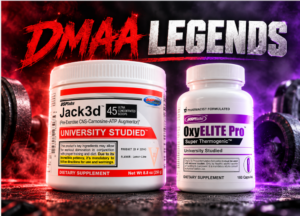
Beginning in 2012, the US FDA issued warning letters concerning DMAA-containing dietary supplements. The agency later took enforcement action, including against products marketed under the Jack3d and OxyElite Pro names. In the UK, the MHRA has taken action against unauthorised medicinal products containing DMAA and has warned athletes to avoid the ingredient.
| Period | What changed | Why it matters now |
|---|---|---|
| 1940s | DMAA’s origins in pharmaceutical decongestants | Historic medical use does not establish modern supplement safety |
| 2000s–early 2010s | Widespread attention around powerful pre-workouts | Older reviews may refer to discontinued formulas |
| From 2012 | US regulatory warnings and enforcement | US dietary-supplement rules cannot be ignored |
| 2010s onward | UK MHRA warnings and action against unauthorised products | UK product classification and authorisation matter |
| Today | Reformulations, legacy names and ingredient debates | Read the current label, not just the product name |
DMAA vs DMHA: What Is the Difference?
DMHA is often called octodrine or 2-aminoisoheptane. Although its name resembles DMAA and both appear in high-stim discussions, they are different compounds. Claims that DMHA is always “smoother”, “safer” or precisely a certain percentage weaker than DMAA are not backed by robust comparative clinical trials.
The FDA’s position is also important: it considers DMHA an unsafe food additive in dietary supplements under US law. That is a US legal classification, not a shortcut to determining how an individual product is classified in the UK.
| Feature | DMAA | DMHA | Caffeine |
|---|---|---|---|
| Common names | Methylhexanamine; 1,3-DMAA | Octodrine; 2-aminoisoheptane | Caffeine; caffeine anhydrous |
| Human exercise-performance evidence | Limited | Limited | Substantially more established |
| Typical reputation | Very intense stimulation | Marketed as a related high-stim alternative | Familiar mainstream stimulant |
| Safety concerns | Blood pressure and serious cardiovascular effects | Inadequate safety evidence; stimulant concerns | Dose-related anxiety, insomnia and cardiovascular symptoms |
| US FDA dietary-supplement position | Not a lawful dietary ingredient | Considered an unsafe food additive | Generally permitted as an ingredient within applicable rules |
| Tested sport | Anti-doping concern | Anti-doping concern | Check rules applicable to the sport and competition |
Geranium Extract vs DMAA: Why the Names Cause Confusion
The term geranium extract has been used in marketing to refer to DMAA. But a genuine plant extract and a specific synthetic stimulant should not be treated as synonyms. The FDA states that it is not aware of reliable scientific evidence that DMAA naturally occurs in plants.
That means neither “plant-based” nor “geranium-derived” wording proves a stimulant is natural, safe, legally permitted or present at a particular concentration. Look for precise ingredient disclosure and independent evidence where available.
Alternative Names Worth Recognising
DMAA labels and regulatory records may use 1,3-dimethylamylamine, methylhexanamine, geranamine, 4-methyl-2-hexanamine or similar chemical terminology. DMHA may be described as octodrine, 2-aminoisoheptane or 1,5-dimethylhexylamine. Names can be confusing: 1,3-DMAA and 1,4-DMAA should not be automatically assumed to be the same substance.
What About Ephedrine, Amphetamines, Synephrine, Yohimbine and Caffeine?
These ingredients often appear together in high-stim discussions, but grouping them by “strength” is misleading. They differ in medical uses, regulation, evidence and safety profiles. Prescription amphetamines, for example, are not appropriate pre-workout substitutes.
| Substance | Why it comes up | Key distinction |
|---|---|---|
| Ephedrine | Historic stimulant and weight-loss discussions | Important regulatory and cardiovascular issues; not a routine pre-workout recommendation |
| Prescription amphetamine medicines | Sometimes compared because of stimulant effects | Controlled medicines; do not use without a legitimate prescription and clinical supervision |
| Caffeine | Well-known pre-workout stimulant | Better studied, but excess intake can still cause insomnia, anxiety and palpitations. |
| Synephrine | Appears in some fat-burner products | Potential interaction concerns when combined with other stimulants |
| Yohimbine/rauwolscine | Marketed in aggressive stimulant formulas | Anxiety, blood-pressure and heart-rate concerns; individual responses vary |
DMAA Pre-Workout Side Effects: What Should You Watch For?
The biggest issue with DMAA is not whether someone feels a stronger gym buzz. It is whether that effect comes with unacceptable cardiovascular and neurological risk. The FDA has warned about serious outcomes including chest tightness, arrhythmias and heart attack. The UK MHRA has also highlighted high blood pressure and cardiovascular harm.
| Possible issue | What it might look like | Appropriate response |
|---|---|---|
| Overstimulation | Jitters, agitation, anxiety, nausea | Stop the product and seek medical advice if symptoms are worrying or persistent. |
| Sleep disruption | Difficulty falling asleep or staying asleep | Avoid further stimulant intake and review the formula with a clinician if needed. |
| Elevated blood pressure or palpitations | Racing or irregular heartbeat | Stop use; obtain clinical assessment, especially if ongoing |
| Severe warning signs | Chest pain, fainting, severe shortness of breath, stroke-like symptoms | Seek emergency medical help immediately |
People with high blood pressure, cardiovascular disease, arrhythmias, a history of stroke, or sensitivity to stimulants should avoid products containing DMAA and discuss any supplement use with their clinician. Stimulants may also interact with medicines. Do not try to “balance out” adverse symptoms by taking a different supplement.
Is DMAA Legal in the UK? What About the USA and Tested Sport?
Legal questions depend on the specific product and market, not just a keyword. The UK MHRA has classified several DMAA-containing products as medicines, meaning they cannot be lawfully marketed as unauthorised medicinal products. In the United States, the FDA states that DMAA is not a dietary ingredient and that dietary supplements containing it are unlawful. The FDA also considers dietary supplements containing DMHA adulterated under US law.
Anti-doping rules are a separate issue from retail law. A product may create an anti-doping risk even if it is advertised for sale. Tested athletes should consult the current WADA prohibited list and UK Anti-Doping guidance, and should assess the actual batch of any supplement.
| Question | Practical answer |
|---|---|
| Does an online listing prove a product is legal in the UK? | No. Product classification and authorisation must be assessed independently. |
| Does a “geranium” claim make DMAA compliant? | No. Marketing terminology is not a substitute for ingredient and regulatory assessment. |
| Is a US formula automatically allowed in the UK? | No. US and UK requirements differ. |
| Can tested athletes rely on a brand’s claims? | No. Verify current anti-doping rules and independent batch-testing records. |
The High-Stim Product Archive: 50 Names from Supplement-Era Discussions
They are retained as an archive of names discussed in the wider hardcore-supplement market—not a verified list of 50 products proven to contain DMAA, a list of banned products, or a recall register. Some names cover multiple reformulations, and some are not pre-workouts. Products sold today may differ completely from historic versions.
- Jack3d (USPlabs)
- OxyElite Pro (USPlabs)
- 1.M.R. (BPI Sports)
- Hemo Rage Black (Nutrex Research)
- Geranium Oil Extract
- Napalm (Muscle Warfare)
- Code Red (Enhanced Athlete)
- CRZ The O.G. (Driven Sports)
- Lean EFX (Formutech Nutrition)
- Nitric Blast (Bio-Engineered Supplements & Nutrition, Inc. – BSN)
- Superpump 250 (Gaspari Nutrition)
- Dexaprine (iForce Nutrition)
- Spirodex (Gaspari Nutrition)
- MethylHex 4,2 (SEI Pharmaceuticals)
- Phenadrine (APS Nutrition)
- Nitro AMP (GAT)
- Hyper F.X. (BSN)
- Stimerex-ES (Hi-Tech Pharmaceuticals)
- Lipodrene (Hi-Tech Pharmaceuticals)
- White Lightning (APS Nutrition)
- Craze (Driven Sports)
- Detonate (Gaspari Nutrition)
- NOXPump (Dorian Yates Nutrition)
- Black Bombs (Dorian Yates Nutrition)
- Methyldrene 25 (Cloma Pharma)
- Diablo Inferno (ANS Performance)
- Atomic 7 (Universal Nutrition)
- Razor 8 (AllMax Nutrition)
- Mesomorph (APS Nutrition)
- Iron Horse Show Time (Iron Horse Series)
- Hellfire EPH 150 (Innovative Diet Labs)
- Methyldrene EPH (Cloma Pharma)
- Thermobombs (Synthetic Supplements)
- FireStorm (G.E. Pharma)
- Hemo Shock (Genetic Edge Technologies)
- Hydroxytrol (Foundation Nutriceuticals)
- Lipofire (Metabolic Nutrition)
- Revolutions PCT Black (Finaflex)
- Lean Dreams (ALRI)
- SP250 (Gaspari Nutrition)
- Slim F.X. (Athletic Xtreme)
- HydroxyElite (Hi-Tech Pharmaceuticals)
- Lipodrol (Hi-Tech Pharmaceuticals)
- Red Wasp 25 (Cloma Pharma)
- Black Mamba Hyperrush (Innovative Labs)
- Dust Extreme (Blackstone Labs)
- King Cobra (Blackstone Labs)
- ECA Xtreme (Hi-Tech Pharmaceuticals)
- D-Stunner (Betancourt Nutrition)
- Pump-HD (BPI Sports)
What Should You Look for in a Pre-Workout Instead?
If the aim is better training, start with the training requirement: endurance, repeated high-intensity efforts, focus during a long session, or simply better adherence to a programme. Different goals call for different ingredients. The best-known stimulant is not automatically the best solution.
A more useful buying checklist:
- Check the complete current ingredient label, not only the front-of-tub claims.
- Look for evidence-backed ingredients and clearly stated amounts, rather than an unexplained proprietary blend.
- Account for caffeine and stimulants from all sources, not just the powder.
- Consider training time, sleep quality, medical conditions and current medication.
- For tested sport, verify independent batch-testing information and applicable anti-doping requirements.
- Compare product purpose and ingredients rather than chasing the strongest subjective sensation.
For readers researching mainstream training formulas, the Cross The Limits pre-workout supplement category provides a broader starting point for comparing current listings and labels.
FAQ: DMAA Pre Workout, DMHA and High-Stim Supplements
What is a DMAA pre-workout?
A DMAA pre-workout is a product marketed for exercise that contains, or historically contained, 1,3-dimethylamylamine (methylhexanamine). DMAA is a powerful stimulant associated with significant cardiovascular concerns. In the UK, the MHRA has taken action against unauthorised medicinal products containing DMAA. Product names and past reputations do not prove the current formulation.
What does DMAA do in the body?
DMAA has stimulant and vasoconstricting properties. Users have reported heightened alertness and reduced fatigue, but these subjective effects do not prove better training outcomes. It can increase blood pressure and is associated with chest tightness, palpitations and other serious cardiovascular effects. The risks are particularly concerning during strenuous exercise or when combined with caffeine.
Is DMAA stronger than caffeine?
DMAA is often described as more intense than caffeine, but there are no reliable head-to-head trials establishing a universal strength ranking or an equivalent dose. Caffeine has substantially more research behind its effects on exercise performance. A stronger sensation does not necessarily mean greater strength, endurance or training quality.
What is the difference between DMAA and DMHA?
DMAA (1,3-dimethylamylamine) and DMHA (commonly called octodrine or 2-aminoisoheptane) are different stimulant substances. Although supplement marketing often compares them, high-quality human evidence is insufficient to claim that DMHA is predictably safer, gentler, or more effective. The US FDA has challenged both as dietary supplement ingredients.
Is geranium extract the same as DMAA?
No. Genuine botanical geranium extract should not automatically be treated as DMAA. Some supplement marketing has used “geranium extract” or related terminology in connection with DMAA, while credible evidence that DMAA occurs naturally in geranium plants is lacking. Check full ingredient disclosures rather than assuming the name identifies a specific stimulant.
Is DMAA legal in the UK?
The UK MHRA has classified several DMAA-containing products as medicines and has removed unauthorised products from sale. Legal status depends on the product and its regulatory classification; simply seeing it for sale does not establish compliance. The MHRA has also publicly advised athletes to avoid DMAA because of its risks.
Are DMAA and DMHA banned in competitive sport?
DMAA (methylhexanamine) and DMHA (octodrine) have been included among prohibited stimulants in anti-doping rules. Tested athletes should consult the current WADA Prohibited List and their sporting body, and use batch-tested supplements where appropriate, independently. Batch testing reduces contamination risk but cannot guarantee complete safety or legal compliance.
What are the most common side effects of strong pre-workouts?
Possible effects include anxiety, agitation, nausea, headaches, sweating, faster heartbeat, elevated blood pressure and difficulty sleeping. Different ingredients and combinations have different risk profiles. Serious symptoms such as chest pain, fainting, severe palpitations, breathing difficulty or neurological changes warrant urgent medical assessment.
Can DMAA be mixed with caffeine or other stimulants?
Combining stimulants may compound effects on the heart, blood pressure, sleep and anxiety. In particular, the FDA warns about DMAA used with caffeine. Avoid layering pre-workout powders, energy drinks, fat burners, nicotine or other stimulating products; an ingredient appearing in separate products does not make the combined intake safe.
Does a pre-workout with more stimulants build more muscle?
No. A stronger stimulant sensation doesn’t prove better hypertrophy or strength gains. Progressive training, adequate calories and protein, sleep and recovery are the main drivers of long-term improvement. Stimulants may change how alert or motivated someone feels in a session, but they cannot replace a sustainable programme.
Why has my pre-workout stopped working?
Perceived effects can change with habitual caffeine exposure, poor sleep, stress, different meals, inconsistent ingredients or changing expectations. Escalating the dose to chase a previous “kick” can increase adverse effects. Review sleep, total daily stimulant intake and the actual label rather than simply taking more.
Which pre-workout ingredients have better evidence for performance?
Caffeine has a meaningful body of research for certain exercise tasks, although not everyone benefits and side effects increase with excessive intake. Creatine monohydrate and beta-alanine have evidence for particular performance outcomes, but they serve different purposes and are not substitutes for stimulants. Compare the full formula and its intended role, not marketing adjectives.
How do I check whether a historical product still has its original formula?
Treat every version as a separate formula. Compare the full Supplement Facts or ingredients panel, production batch, manufacturer announcements and applicable regulatory information. Legacy names such as Jack3d or Mesomorph have appeared across different formulations; a link to a current listing does not verify ingredients used in older versions.
What should I do if I feel unwell after a high-stim pre-workout?
Stop using the product. For chest pain, collapse, severe breathlessness, severe palpitations or stroke-like symptoms, seek emergency medical care immediately. For other concerning effects, seek clinical advice and keep the product packaging and ingredient information available for the clinician. Do not attempt to offset symptoms by taking other stimulants or supplements.
Final Verdict: Know the Formula, Not Just the Hype
DMAA played a notable role in the history of hardcore pre-workouts, but a legendary reputation is not a substitute for proof. The useful questions are simple: What is actually in this version? What evidence supports the claimed training benefit? What are the risks? And what rules apply where the product is sold or used?
DMHA, geranium-related marketing and alternative stimulants deserve the same scrutiny. For lasting training progress, consistent workouts, sound nutrition and adequate recovery are more dependable than pursuing an ever-stronger stimulant effect. If you compare modern pre-workouts, start with transparent product information and your individual health considerations—not the name on an old tub.