


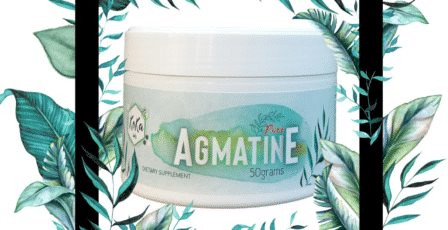

Agmatine sulfate is a compound that is a metabolite of agmatine, a substance formed
arginine processing. The human body occurs naturally in the small intestine, liver, adrenal glands, kidneys and accumulates in nerve cells.
Nerve cells. Agmatine is produced in an enzymatic way as a result of the action of bacteria. It can be found in fermented foods, but its concentration in
ingested foods is too low to achieve therapeutic effects. For this reason
That is why agmatine sulfate can be delivered using supplementation.
Key Takeaways
-
Arginine Metabolite: Agmatine sulfate is a natural byproduct of the amino acid arginine, acting as both a neurotransmitter and a neuromodulator in the body.
-
Powerful Nitric Oxide Booster: It effectively regulates nitric oxide levels, leading to significant vasodilation (blood vessel widening), which is highly valued by athletes for the “muscle pump” effect.
-
Neuroprotective Properties: Agmatine supports the nervous system by protecting nerve cells from toxins and exhibits nootropic effects, improving focus and cognitive functions.
-
Mood and Stress Support: It helps optimize cortisol levels while boosting dopamine and norepinephrine, potentially alleviating anxiety and preventing depressive states.
-
Metabolic and Physical Benefits: Supplementation can enhance protein synthesis, promote lipolysis (fat burning), and improve glucose metabolism, aiding in weight loss and recovery.
-
Cardiovascular Health: By improving endothelial function and blood flow, agmatine sulfate helps lower blood pressure and supports overall heart health.
What are the characteristics of agmatine?
Agmatine is a biogenic amine composed of one or two positive charges.
Its molecule is essential and stable, and its lipophilicity and a high share of hydrogen bonds
The lipophilicity and high proportion of hydrogen bonds translate into poor absorption. This substance is seen not only as a
neurotransmitter but also as a neuromodulator. In the body, agmatine affects the levels of nitric oxide and the process of blood vessel dilation. This compound blocks nitric oxide synthesis by regulating and inhibiting the main enzymes responsible for its production. Responsible for its production. Agmatine was first discovered by Albrecht Kossel,
who made this discovery in 1910. As a result of research, he observed the production of this substance from arginine in a natural fermentation process leading to decarboxylation of the amino acid. Agmatine sulfate can be produced by humans by converting arginine. Depending on the organ, this process occurs at different intensities.
How does the biosynthesis and metabolism of agmatine work?
L-arginine is naturally transformed into nitric oxide by releasing it by the action of a synthesis enzyme. Agmatine, on the other hand, can influence
the metabolism of nitric oxide. However, it is not directly converted into it. The primary metabolic pathways of this substance include the enzyme diamine oxidase
DAO, which also handles histamine metabolism. During studies in rats, it was discovered
that this pathway probably accounts for up to 50 percent of the body’s metabolized
agmatine. Inhibition of the DAO enzyme elevates plasma agmatine, undergoing its most significant
expression in gastric, intestinal, epithelial, and renal tissues. It is probably not present
in cardiac muscle, skeletal muscle, or the brain. Agmatine can be
converted to polyaminoprescin directly by the enzyme agmatinase present in urea as a byproduct.
Urea as a byproduct. There is also the possibility of conversion to
carbamiloputrescin, a byproduct of ammonia, and then into the
putrescine – by the enzyme putrescine transcarbamylase.
What is the chemical structure of agmatine?
Regardless of the metabolic pathway, only about 10 percent of agmatine is metabolized to polyamines. Agmatine. This substance increases the activity of the protein inhibiting intracellular accumulation of polyamines and their synthesis from ornithine due to inhibition of L-ornithine decarboxylase. This enzyme is induced by the polyamines themselves, whereas agmatine is the only known molecule to induce an enzyme that is not a polyamine. Sulfate agmatine is absorbed after oral ingestion, and even low doses increase its concentration in organs. In the systemic circulation, the half-life of this substance is less than 10 minutes. Agmatine cannot be transported across plasma membranes passively and therefore requires the presence of transporters. Uptake into cells occurs probably with putrescine transporters, high concentrations of which show an inhibitory effect on agmatine uptake and vice versa.
Properties of agmatine sulfate
Agmatine sulfate has solid neuroprotective properties, thanks to which it supports
the work of the nervous system and protects it from toxic substances. This compound also has
vasodilatation, improving endothelial function and effectively lowering
blood pressure. Agmatine sulfate also contributes to increased protein synthesis, and its
action on cyclic AMP enhances the process of lipolysis and promotes weight loss.
Similar to arginine, this substance accelerates regeneration and takes part in the production
of nitric oxide. By stimulating this process, it promotes the health of the cardiovascular system and
minimizes the risk of many diseases. It exhibits antioxidant functions, thanks to which it
counteracts free radicals, limiting development and proper
cells. Agmatine sulfate dilates blood vessels, increases blood flow, and
favorably influences tissues’ blood supply and oxygenation.
What are the primary effects of agmatine sulfate on the body?
Agmatine sulfate has an analgesic effect while sensitizing the body to stimulants. It has a beneficial impact on reducing stress hormones by optimizing cortisol levels. Cortisol. It contributes to an increase in adrenaline and noradrenaline, as well as dopamine. Its use thus improves mood and has an anti-anxiety effect, preventing depression. Agmatine can improve mental performance by increasing concentration and improving many cognitive processes. Due to its properties increasing Its ability to increase mental and physical performance is often classified as a nootropic agent. Agmatine sulfate is also used in preventing Alzheimer’s disease, caused by insulin
It is also used against Alzheimer’s disease caused by insulin resistance and accumulation of neurofibrillary tangles in the brain.
This is because the substance prevents cognitive decline and also improves glycemia.
Agmatine for athletes
Agmatine sulfate is especially valued by athletes because they can get
agmatine sulfate, which is especially appreciated by athletes because it can induce a very high so-called muscle pump. This is a direct result of the dilation of
blood vessels, leading to improved muscle performance by delivering
more blood and nutrients to support their construction and regeneration.
This process occurs with appropriate blood supply and oxygenation of muscle tissues, thanks to which
as a result of which their work is optimized even during very intensive exercise.
Thus, agmatine sulfate can be found in the composition of many pre-training products, which significantly improve the effectiveness and efficiency of athletes.
What is the difference between Arginine and Agmatine Sulfate?
Agmatine is a metabolite of Arginine. While both support nitric oxide production, Agmatine is more potent in its neurological effects and acts as a neuromodulator, offering additional benefits for mood and focus that Arginine does not provide directly.
Why do athletes use Agmatine Sulfate in pre-workouts?
Athletes value Agmatine for its ability to induce a massive “muscle pump.” It dilates blood vessels, allowing for better delivery of nutrients and oxygen to muscle tissues, which improves performance and speeds up regeneration.
Does Agmatine Sulfate have nootropic benefits?
Yes, Agmatine is often classified as a nootropic because it protects the brain from oxidative stress, improves concentration, and enhances mental performance by modulating key neurotransmitters like dopamine.
Can Agmatine help with weight loss?
Agmatine sulfate can promote weight loss by increasing cyclic AMP (cAMP) levels, which enhances lipolysis (the breakdown of fats) and improves the body’s glycemic response.